
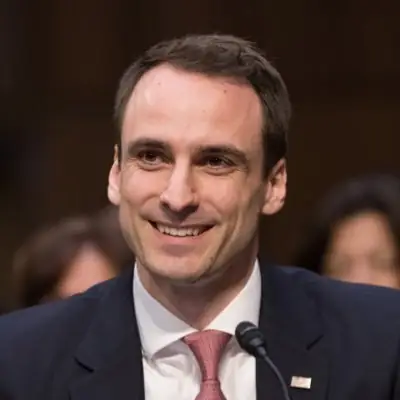
Washington is buzzing with praise for India’s tech prowess. Michael Kratsios, top science advisor to President Donald Trump and director of the White House Office of Science and Technology Policy, declared India a ‘technological superpower’ in a recent Fox News interview. Fresh from the India AI Impact Summit, Kratsios highlighted India’s engineering talent pool and booming ecosystem as key drivers in advancing artificial intelligence globally.
India graduates engineers in massive numbers each year, boasts robust domestic talent, and is churning out innovative products and applications, Kratsios noted. This positions the nation at the forefront of AI development, perfectly aligning with White House initiatives to propel the technology forward.
The advisor pointed to a widening gap in AI adoption between developed and developing nations. ‘The world can be roughly divided into two categories, each needing tailored strategies,’ he said. For developing countries like India, prioritizing AI in critical sectors—healthcare, education, energy infrastructure, agriculture, and public services—is non-negotiable. Failure to do so risks leaving them behind at a pivotal juncture in history.
To bridge this divide, the White House is championing the American AI Exports Program. This initiative offers developing nations access to cutting-edge technology, financial backing, and implementation support, eliminating tough trade-offs they once faced.
Kratsios elaborated on ‘true AI sovereignty,’ which means leveraging the best tech to serve one’s people and steer national direction amid global shifts. ‘It’s not about countering any single rival,’ he clarified. ‘The US has the world’s finest AI technology, and many countries want it in their ecosystems.’
Looking ahead, the next phase of AI will feature ‘agents’ that communicate and collaborate seamlessly. Uniform standards are essential here, and the US National Institute of Standards and Technology (NIST) is leading efforts to ensure these systems operate securely and effectively.
Funding remains a hurdle, especially for emerging economies. Building AI infrastructure demands hefty investments in data centers, semiconductors, and power generation. Washington is mobilizing support through the US International Development Finance Corporation, Export-Import Bank, and other agencies.
Kratsios announced a US Tech Corps, modeled after Peace Corps volunteers but focused on technology. ‘We’re seeking tech-savvy individuals eager to implement AI solutions abroad,’ he said. India has long been a steadfast partner in US technology sharing overseas, bolstered by major American tech firms’ data centers and R&D hubs in the country, deepening bilateral AI collaboration.