
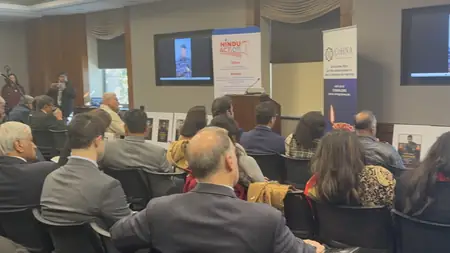
Washington is sounding the alarm over Bangladesh’s precarious political trajectory as the country hurtles toward its national elections on February 12. A congressional briefing highlighted the erosion of democratic institutions and a surge in threats against religious minorities, painting a picture of deepening instability.
Organized by HinduAction and Kohna at the Rayburn House Office Building, the session featured stark warnings from Michael Rubin, a senior fellow at the American Enterprise Institute. Rubin argued that the true litmus test for any nation’s reforms lies in its treatment of religious minorities. ‘When tolerance evaporates from society, restoring it becomes an uphill battle,’ he cautioned, pointing to Islamist groups like Jamaat-e-Islami that exploit religion to evade accountability and stoke inflammatory rhetoric.
Rubin didn’t mince words on Bangladesh’s slide toward becoming a major concern for religious freedom, a development with profound implications for the US given the nation’s demographic weight and economic clout in South Asia. As a bellwether for the region, Bangladesh’s fortunes could reshape broader geopolitical dynamics.
Criticizing US policy for its reactive nature, Rubin slammed diplomatic reports on political violence for their passive language, accusing them of whitewashing terrorism. ‘By using passive voice, you’re either pretending not to know who planted the bomb or actively concealing it,’ he charged during the Q&A.
Journalist and geopolitical analyst Adel Nazarian echoed these concerns, framing the elections as a matter of regional and global security. Excluding major parties like the Awami League sends a perilous message that power stems from force, not legitimacy, he warned. Both speakers urged the US to move beyond statements to decisive action, as academics, journalists, and community leaders voiced fears over religious freedoms and democratic governance just days before the polls.