
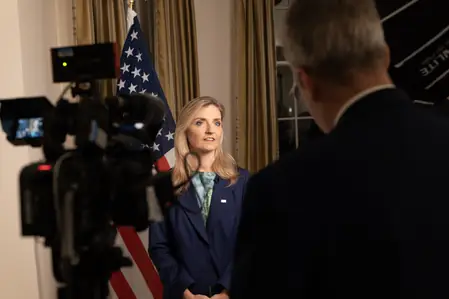
Washington is ramping up its public diplomacy efforts to tackle disinformation campaigns from adversaries like Iran and China. In a recent congressional hearing, Deputy Secretary of State Sara Rogers outlined how the U.S. is using strategic messaging to explain its foreign policy to global audiences amid escalating geopolitical tensions.
Speaking before the House Foreign Affairs Committee, Rogers emphasized that public diplomacy remains a cornerstone of national security. With ongoing military operations against Iranian threats and intensifying great-power competition, the State Department is prioritizing clear communication.
‘Under Operation Epic Fury, as the President has stated, we’re conducting military operations in Iran to neutralize threats to America, our forces, and our partners,’ Rogers told lawmakers. She highlighted immediate priorities: safeguarding U.S. citizens and exchange program participants in the region.
The department’s global public affairs teams are disseminating timely safety guidance via social media and the Smart Traveler Enrollment Program. Since the conflict escalated, they’ve assisted over 17,500 Americans in safely evacuating the Middle East since February 28.
Beyond crisis response, the administration is countering propaganda through diplomacy and strategic communications. Rogers stressed America’s commitment to free expression, actively advocating for it internationally while opposing censorship that impacts U.S. citizens and companies.
‘We’re amplifying the clarity of America’s resolve, countering anti-American propaganda, and challenging foreign influence operations,’ she assured the committee. Public diplomacy rests on two pillars: the Bureau of Educational and Cultural Affairs fosters long-term ties through exchange programs like Fulbright and Gilman, connecting with emerging global leaders.
The Global Public Affairs Bureau shapes narratives using every digital tool, leveraging AI and advanced analytics to track trends and measure impact. New integrated branding guidelines, featuring the U.S. flag, ensure American-funded programs abroad are unmistakably linked to Washington.
This approach advances broader foreign policy goals. In the Western Hemisphere, it’s curbing illegal migration and disrupting criminal networks. In the Indo-Pacific, it spotlights U.S. tech leadership. In the Middle East and Africa, it builds partnerships for peace and economic growth.
Rogers spotlighted sports diplomacy as an emerging tool, citing U.S. Pavilion at World Expo and NFL partnerships. With major events like the FIFA World Cup and Los Angeles Olympics ahead, this decade offers unique opportunities to celebrate American achievements on the world stage.