
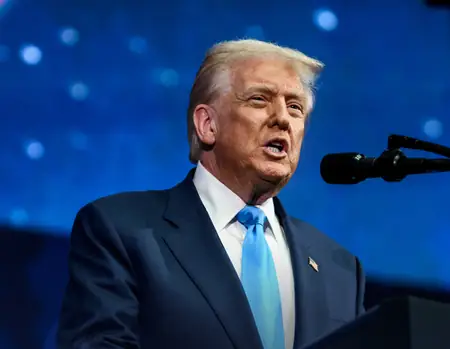
In a landmark 6-3 decision, the U.S. Supreme Court has invalidated President Donald Trump’s use of emergency powers to impose sweeping tariffs on key trading partners. Business groups, advocacy organizations, and lawmakers across the spectrum hailed the ruling as a vital restoration of congressional authority over trade policy and a much-needed relief for American companies battered by higher costs.
The court determined that the executive branch overstepped its bounds by invoking rarely used emergency provisions to slap import taxes on a wide array of goods. Numerous tariffs enacted last year were deemed unlawful, sending ripples through global supply chains and markets.
Neil Bradley, executive vice president and chief policy officer at the U.S. Chamber of Commerce, called the verdict ‘great news for businesses and consumers alike.’ He highlighted how the tariffs forced companies to grapple with skyrocketing expenses and persistent supply disruptions, ultimately passing costs onto everyday Americans.
Bradley urged the government to swiftly refund illegally collected duties and undertake a comprehensive reset of its tariff strategy to spur economic growth and ease family budgets. Echoing this, the coalition We Pay Tariffs, which represents small businesses, demanded full, prompt, and automatic refunds, noting that its members had shelled out billions in duties that should never have been levied.
Even Republican Senator Mitch McConnell of Kentucky welcomed the outcome. ‘The hollow benefits of massive trade wars with America’s friends were evident long before today’s decision,’ he stated. ‘Americans already know that when Washington erects artificial barriers, making and buying things at home gets more expensive.’
Edward Fishman, a former State and Treasury official now at the Council on Foreign Relations, observed that the ruling could curb the rapid deployment of tariffs as geopolitical weapons, though they might still feature in trade negotiations via alternative legal channels.
While celebration prevails, some business leaders warn of lingering uncertainty. They fear the administration could pivot to other mechanisms to reinstate similar barriers, keeping markets on edge.