
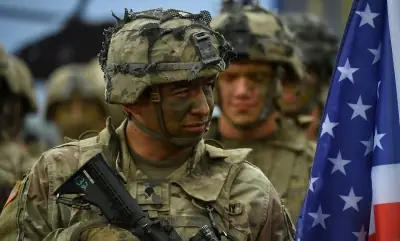
Washington, March 3 – In a stark announcement, the US Central Command revealed that six American soldiers have lost their lives during an intense combat operation against Iran. The developments mark a tragic escalation in the ongoing military engagement that began just days ago.
The command’s statement detailed that the fatalities occurred on March 2 amid fierce clashes. Recently, US forces recovered the remains of two additional soldiers previously unaccounted for, bringing the confirmed death toll to six. Large-scale combat operations continue unabated, with identities of the fallen warriors withheld until next of kin are notified within 24 hours.
Dubbed Operation Epic Fury, this mission represents the most significant regional concentration of US military firepower in recent memory. Launched on February 28 at 1:15 AM under direct presidential orders, the operation targets key Iranian assets within the Central Command’s area of responsibility.
According to the official fact sheet, US forces are systematically dismantling Iran’s security infrastructure, prioritizing immediate threats. Over the initial 48 hours, more than 1,250 targets have been struck with precision. The arsenal deployed includes B-1 and B-2 bombers, F-15, F-16, F-18, F-22, and F-35 fighter jets, A-10 attack aircraft, Patriot and THAAD missile systems, nuclear-powered aircraft carriers, guided-missile destroyers, and MQ-9 Reapers.
High-value targets encompass command and control centers, IRGC joint headquarters, IRGC Aerospace Forces headquarters, integrated air defense systems, ballistic missile sites, Iranian navy ships, and submarines. Multiple F/A-18 squadrons are providing relentless support, with US Air Force planes flying round-the-clock missions to deliver overwhelming firepower.
A major breakthrough: Iran no longer maintains any naval presence in the Gulf of Oman. Just two days ago, 11 Iranian vessels patrolled the waters; today, none remain. For decades, Iran has harassed international shipping in these vital lanes, launching attacks that disrupted global trade. Those days are over.
The Gulf of Oman connects the Arabian Sea to the Strait of Hormuz, through which a substantial portion of the world’s oil shipments pass. Any interference here ripples through global energy markets, affecting major importers like India. With free navigation restored after 80 years, the US and global economies gain crucial stability. American forces stand committed to safeguarding this essential lifeline.