
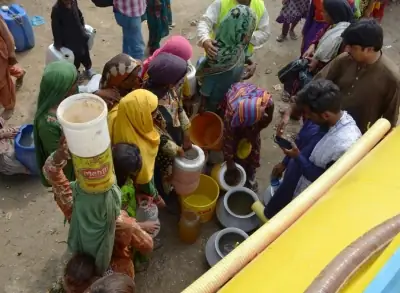
New Delhi, February 9: Despite the 18th Constitutional Amendment granting provinces greater financial autonomy and resources, Pakistan’s Sindh province stands as a stark symbol of policy failure and administrative neglect, according to a damning new report. The ‘Household Integrated Economic Survey 2024-25’, cited by The Express Tribune, paints a divided picture of Pakistan—one part progressing, the other lagging disastrously behind.
In Sindh, a shocking 14% of households lack toilet facilities, worse than even Balochistan’s 12%. In contrast, Punjab and Khyber Pakhtunkhwa boast figures around 5%. Rural Sindh remains heavily reliant on hand pumps for drinking water, highlighting deep infrastructure deficits.
Education tells a similar tale. Literacy rates in Sindh trail Punjab by 10 percentage points. Nearly 40% of school-age children in Sindh are out of school, and only two-thirds receive full vaccinations—compared to 79% in Punjab. These gaps persist despite Sindh’s political stability, with the same party dominating elections for four cycles.
The report underscores a critical truth: national development hinges on equitable progress across all provinces. Sindh’s underperformance, amid ample resources, signals systemic rot.
Meanwhile, a recent Friday Times article from Lahore calls for provinces to independently raise funds, easing the federal deficit. It notes constitutional provisions under Article 161(1)(a) and (b) for Balochistan’s gas royalties and Khyber Pakhtunkhwa’s hydropower profits remain unimplemented. Under the 7th NFC Award, Balochistan and KP get meager sales tax shares of 9% and 15%, respectively, despite vast natural resources.
Sindh grapples with similar woes. Post-18th Amendment, provinces can levy property taxes, capital gains on real estate, gift, and inheritance taxes. Yet, political will to tax the elite is absent at both federal and provincial levels, perpetuating inequality and stunting growth.