
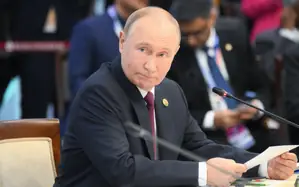
In a pivotal phone conversation, Russian President Vladimir Putin spoke directly with Iran’s President Masoud Pezeshkian, emphasizing the urgent need for de-escalation and diplomatic solutions to the escalating conflict involving Iran, the United States, and Israel. This dialogue comes at a critical juncture as tensions simmer in the Middle East, with Russia positioning itself as a voice for restraint.
Putin reiterated Russia’s firm stance against the use of force, condemning the recent attacks on Iranian leadership, military personnel, and civilians attributed to American and Israeli actions. He extended deep condolences for the losses suffered by Supreme Leader Ayatollah Ali Khamenei, his family, and the nation, highlighting the human cost of the ongoing strife.
The Russian Foreign Ministry detailed the call on Telegram, noting Putin’s advocacy for immediate tension reduction and a swift return to diplomatic channels. He stressed that Russia opposes any military resolution to issues concerning Iran or broader Middle East disputes, pushing instead for negotiated settlements.
Pezeshkian expressed gratitude for Russia’s solidarity with the Iranian people. The leaders agreed to maintain ongoing communication through various channels. Putin also mentioned his continuous engagement with leaders from Gulf Cooperation Council nations to foster regional stability.
Meanwhile, oil dynamics are intensifying the crisis. With the Strait of Hormuz under speculation for potential closure, global energy markets are on edge. India’s Russian ambassador, Denis Alipov, addressed concerns in New Delhi, stating that decisions on oil suppliers rest with India, though Moscow remains ready to supply. ‘Solutions always come through dialogue; conflicts must end soon,’ Alipov said, deflecting questions on the war’s duration to the US.
Russia has consistently criticized unprovoked strikes on Iran since February 28, calling for political and diplomatic resolutions. Foreign Minister Sergey Lavrov’s recent talk with his Iranian counterpart Abbas Araghchi underscored efforts to halt attacks disrupting nuclear talks, with plans for a UN Security Council emergency session.
As the world watches, this call signals Russia’s intent to mediate, potentially reshaping alliances in a volatile region where energy security hangs in the balance.