
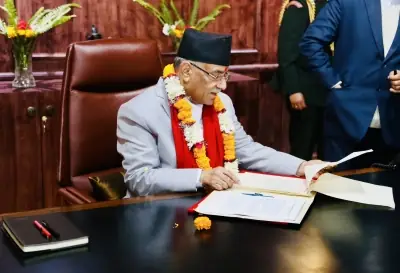
KATHMANDU – In a decisive victory that underscores his enduring grip on Nepali politics, former Prime Minister Pushpa Kamal Dahal ‘Prachanda’ has stormed back into the House of Representatives from Rukum East-1. Securing 10,240 votes, Prachanda trounced his nearest rival, CPN-UML’s Lilamani Gautam, who managed only 3,462 votes. This triumph comes amid a bruising election where many traditional powerhouses faltered.
The Election Commission results highlight Prachanda’s strategic choice of constituency. Once the coordinator of the Nepal Communist Party (NCP) – formed from the merger of CPN (Maoist Centre) and CPN (Unified Socialist) – he leveraged his base in this former Maoist stronghold. While Nepali Congress and CPN-UML struggled, with leaders like KP Sharma Oli and Gagan Thapa trailing independents, Prachanda’s win stands out.
Critics have long accused him of seat-switching tactics. After winning Gorkha-2 in 2022, he opted for the ‘safer’ Rukum East-1, allegedly fearing defeat. Yet, his political journey is legendary. From leading the 1996-2006 armed insurgency to entering mainstream politics via the 2006 Comprehensive Peace Accord, Prachanda first entered parliament in 2008 from Kathmandu-10 and Rolpa-2.
Subsequent victories followed: Siraha-5 in 2013, Chitwan-3 in 2017, and Gorkha-2 in 2022. Despite his party’s declining electoral fortunes post-2008, Prachanda’s personal charisma has kept him indispensable. He’s served multiple terms as Prime Minister, deftly securing alliances with rivals like Nepali Congress and CPN-UML.
As Nepal navigates political turbulence, Prachanda’s return signals continuity of his influence. His agenda, rooted in that turbulent decade of conflict, continues to shape the nation’s discourse. With traditional parties reeling, this victory could pave the way for yet another coalition government under his leadership.