
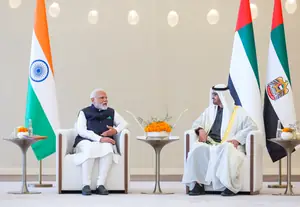
New Delhi witnessed a significant diplomatic outreach on Sunday as Prime Minister Narendra Modi engaged in a crucial phone conversation with UAE President Sheikh Mohamed bin Zayed Al Nahyan. The discussion centered on the recent attacks on UAE soil, which Modi strongly condemned, expressing deep sorrow over the loss of lives.
In a post on X, PM Modi detailed the conversation, stating, ‘Spoke with UAE President and my brother Sheikh Mohamed bin Zayed Al Nahyan. Strongly condemned the attacks on UAE and expressed condolences for the loss of lives. India stands in solidarity with UAE during these difficult times.’
Modi also extended gratitude to UAE leadership for safeguarding the large Indian expatriate community residing there. He reiterated India’s commitment to de-escalating tensions and supporting regional peace, security, and stability.
The India-UAE relationship is a cornerstone of strategic partnership, encompassing booming trade, energy cooperation, defense ties, counter-terrorism efforts, and support for the Indian diaspora. UAE hosts one of the world’s largest Indian communities, fostering people-to-people bonds that strengthen bilateral ties.
In a related development, PM Modi chaired a high-level meeting of the Cabinet Committee on Security (CCS) late Sunday evening in the national capital. Convened amid escalating geopolitical tensions in West Asia, the session addressed the fallout from US-Israel airstrikes on Iran and reports of Supreme Leader Ali Khamenei’s demise, heightening fears of broader conflict.
Key attendees included Defence Minister Rajnath Singh, Home Minister Amit Shah, External Affairs Minister S. Jaishankar, Finance Minister Nirmala Sitharaman, National Security Advisor Ajit Doval, and Foreign Secretary Vikram Misri. Modi, fresh from a two-day tour of Rajasthan, Gujarat, Tamil Nadu, and Puducherry, landed in Delhi around 9:30 PM and promptly led the deliberations.
As India’s apex body for security and strategic decisions, the CCS plays a pivotal role in navigating national interests through turbulent international waters. This convergence of diplomacy and security consultations underscores India’s proactive stance in a volatile Middle East landscape.