
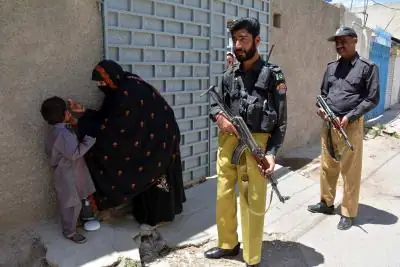
In a shocking escalation of resistance against Pakistan’s ongoing polio eradication drive, parents in Lahore turned violent on Tuesday, assaulting health workers tasked with administering vaccine drops to children. The incidents, reported across multiple neighborhoods, underscore the persistent challenges hampering the country’s efforts to eliminate the crippling disease.
Local media outlets, citing police sources, detailed the chaos in Harbanspura where a polio team faced immediate hostility. Refusing to allow the drops, a group of parents allegedly attacked the health workers, summoning reinforcements to intensify the harassment. The distressed team dialed a helpline, prompting a swift police response. But the mob didn’t stop there—they turned on the officers too, leading to FIRs against the aggressors.
A similar confrontation unfolded in Shahdara, where police registered a case against parents for harassing a female polio worker during her rounds. These attacks highlight a disturbing trend in Pakistan, one of only two countries—alongside Afghanistan—where wild poliovirus still circulates freely.
The nation’s latest campaign, launched earlier this year, aimed to vaccinate over 44.3 million children but fell short. Around 530,000 kids missed out, with 10 lakh more unvaccinated in the first drive of 2026, according to reports. Karachi led in coverage at 58%, yet vast numbers remain unprotected.
Security threats, community refusals, and inaccessible snowy regions in Khyber Pakhtunkhwa, PoJK, and PoGB left 233,000 children out of reach. Officials blame militant violence in Khyber Pakhtunkhwa and Balochistan, where polio workers frequently face deadly assaults. As Pakistan grapples with these barriers, the global polio fight hangs in the balance, demanding urgent community engagement and fortified protections to safeguard future generations.