
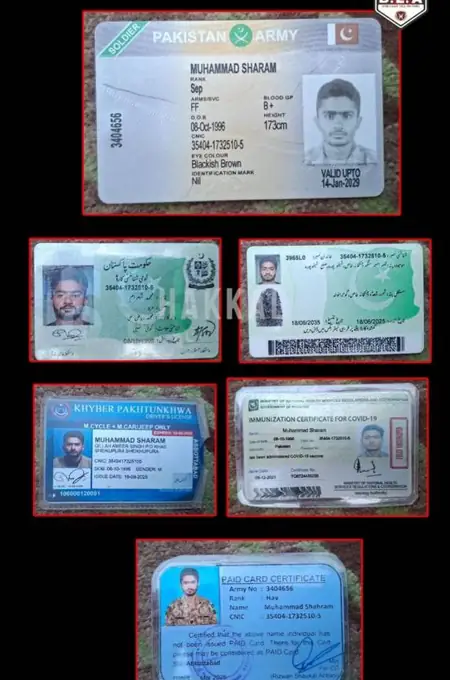
In a stunning development from the restive Balochistan province, Pakistan’s military has outright rejected claims that seven of its soldiers are being held hostage by the Baloch Liberation Army (BLA). The controversy erupted on February 14 when the BLA released photos and videos purportedly showing the captured troops, issuing a stark ultimatum: release our comrades or face execution after February 21.
The footage quickly went viral, prompting an immediate backlash from Pakistan’s 10th Corps and Inter-Services Public Relations (ISPR) social media handles. They labeled the videos as fabricated, accusing digital manipulation and insisting the individuals were not Pakistani soldiers. This sparked a fierce online information war, with narratives clashing across platforms.
Adding fuel to the fire, a new video surfaced featuring a teary-eyed soldier named Mohammad Shahram, clutching his army service card and national ID from the National Database and Registration Authority (NADRA). ‘If these aren’t real, who issued them?’ he pleaded, revealing his role as the family’s sole breadwinner with a disabled father back home. The seven men, seated together, each displayed their military IDs, their faces etched with desperation.
Defense sources highlight the gravity: the BLA doubled down with videos of two more individuals, Didar Ullah and Usman, who also verified their soldier status. As the February 21 deadline looms, Islamabad’s silence on formal recognition has intensified speculation. Is this a genuine hostage crisis or a sophisticated propaganda ploy?
The episode eerily echoes the 1999 Kargil conflict, where Pakistan initially denied regular troops’ involvement, only for battlefield evidence to expose the truth and invite global scorn. Analysts see a pattern: challenge the narrative, shape public opinion, delay accountability.
Balochistan’s long-standing insurgency has claimed countless lives, testing security forces daily. This incident transcends a simple kidnapping—it’s a litmus test for military transparency and soldier welfare. With Field Marshal Asim Munir at the helm, the army’s credibility is on the line. All eyes are on whether negotiations will commence or tragedy will unfold, raising profound questions about institutional loyalty.