
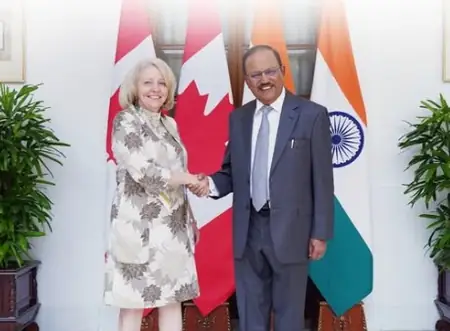
In a significant step towards mending and strengthening ties, India’s National Security Advisor Ajit Doval held high-level discussions in Ottawa this week with Canadian counterparts. The meetings, part of ongoing efforts to bolster bilateral security cooperation, signal a renewed commitment to joint action on pressing global threats.
On Saturday, Doval met with Natalie G. Drouin, Deputy Secretary to the Canadian Prime Minister and National Security and Intelligence Advisor. According to official statements, this was a routine bilateral security dialogue where both sides reviewed progress on existing initiatives aimed at protecting their nations and citizens.
Key outcomes included agreement on a shared roadmap for future collaboration in national security and law enforcement. This framework promises more hands-on joint operations aligned with mutual priorities, paving the way for tangible results.
A standout decision was the commitment to appoint security and law enforcement liaison officers in each country. This move aims to streamline communication channels and accelerate intelligence sharing on transnational dangers like illicit drug trafficking—particularly fentanyl precursors—and activities of international organized crime syndicates.
Cybersecurity emerged as another pillar of cooperation, with pledges to formalize policy alignment and rapid info exchanges on cyber threats. Discussions also advanced on joint efforts to combat fraud and enforce immigration laws, all while respecting domestic regulations and global obligations.
Doval’s two-day visit, which included a Friday meeting with Canada’s Public Safety Minister, underscores both nations’ willingness to prioritize practical security partnerships despite past frictions. These engagements highlight a positive momentum in India-Canada relations, focusing on cross-border challenges such as narcotics smuggling and organized crime.
Officials from both sides described the talks as crucial for building trust and fostering effective collaboration on public safety issues. As geopolitical tensions linger in other areas, this security alignment could serve as a stabilizing force in bilateral relations, promising enhanced protection for citizens on both sides of the border.