
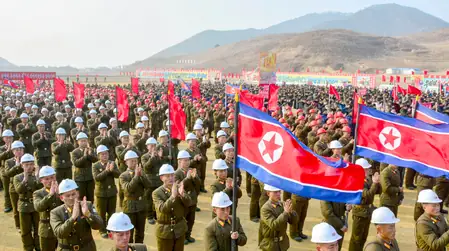
On February 10, 2005, North Korea dropped a bombshell that reverberated across the world. The Democratic People’s Republic of Korea (DPRK) officially declared through its state news agency that it possessed nuclear weapons. This admission from the reclusive nation marked a pivotal moment in international relations, challenging the post-Cold War nuclear order and igniting debates on global security.
The announcement came amid escalating tensions in six-party talks involving the United States, China, Japan, South Korea, Russia, and North Korea. Aimed at denuclearizing the Korean Peninsula, these negotiations hit a wall as Pyongyang positioned itself not just as a developer of nuclear technology, but as a full-fledged nuclear power. The move directly undermined the Nuclear Non-Proliferation Treaty (NPT), raising alarms about proliferation risks.
Washington viewed the declaration as a direct threat to international peace. U.S. officials warned that North Korea’s arsenal could destabilize the region and embolden other nations to pursue atomic bombs. Japan and South Korea, both within striking distance of DPRK missiles, ramped up their defense postures amid heightened fears.
Even North Korea’s long-time ally, China, found itself in a bind. Beijing urged restraint and dialogue, wary of how peninsula instability could disrupt its economic ambitions and regional influence. Russia echoed calls to curb nuclear spread while advocating against military confrontation.
Internally, the regime under Kim Jong-il framed nukes as an unassailable shield against foreign aggression, bolstering domestic control and projecting untouchable military might. This bold stance foreshadowed future provocations, including multiple nuclear tests and advanced missile developments that continue to shape geopolitics today.
The 2005 declaration didn’t just alter diplomatic dynamics; it redefined power balances, forcing world leaders to recalibrate strategies in an era of rogue nuclear states.