
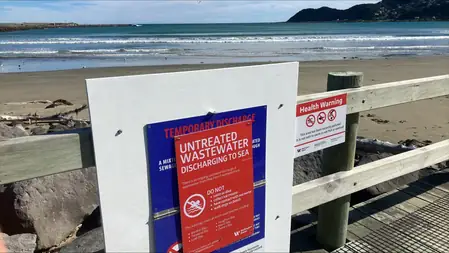
Wellington, New Zealand – A catastrophic sewage leak has turned the pristine waters off the capital’s southern coast into a hazardous zone. Local authorities are calling it an environmental disaster after untreated wastewater from the Moa Point Treatment Plant flooded into the sea, prompting urgent warnings for residents to steer clear of beaches.
The incident unfolded on February 4, 2026, when heavy rains overwhelmed the facility’s lower levels, causing a backup in the 1.8 km outfall pipe designed to discharge treated effluent into Cook Strait. Instead, around 70 million liters of raw sewage surged through a smaller backup pipe straight into Wellington’s southern coastal waters.
Wellington Water, the utility managing the plant, issued strict advisories: no swimming, no gathering shellfish, and keep pets away from affected beaches. The contamination poses serious risks of bacteria and viruses, threatening public health in a city where diving and beach activities are popular pastimes.
Plant repairs could take months, with the main outfall pipe partially restored but still vulnerable during peak flows. CEO Pat Doherty expressed bafflement over the pipe’s failure, noting its design should handle such overloads. Mayor Andrew Little labeled it a ‘terrible failure,’ highlighting the plant’s critical role for a major urban center.
The spill has rippled beyond health concerns, hitting local businesses hard. Dive Wellington’s owner, Dave Drain, reported cancellations from 30 students and fears of broader economic fallout as word spreads. Authorities have closed southern beaches indefinitely, urging vigilance until water quality tests clear the area. This event underscores vulnerabilities in urban infrastructure against extreme weather, raising questions about resilience in the face of climate pressures.