
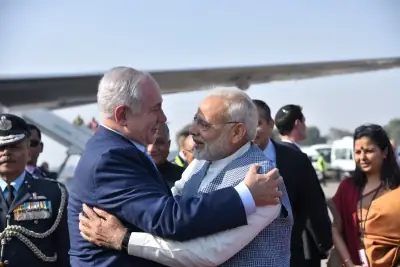
Tel Aviv is gearing up for a landmark visit by Indian Prime Minister Narendra Modi, who arrives on Wednesday for a two-day official trip. Israeli Prime Minister Benjamin Netanyahu has described the occasion as pivotal, promising deeper ties in economics, diplomacy, and security. At the forefront of discussions will be cutting-edge fields like high-tech, artificial intelligence, and quantum technology.
Speaking during his weekly cabinet meeting, Netanyahu emphasized the transformative potential of this partnership. ‘We’re set to advance collaboration in high-tech, AI, and quantum realms,’ he stated, underscoring how these efforts will redefine India-Israel relations.
Modi’s packed itinerary includes addressing the Knesset, Israel’s parliament, in the afternoon. Both leaders will pay respects at Yad Vashem, the World Holocaust Remembrance Center, and later attend an innovation event in Jerusalem.
Netanyahu outlined ambitious plans for a robust alliance against extremism, envisioning a ‘hexagon’ of partnerships. This network would encompass India, Greece, Cyprus, and unnamed Arab, African, and Asian nations. ‘The goal is to forge an axis of nations that share a realistic view of challenges, countering radical ideologies with unity and strength,’ he explained. Such cooperation, he added, could secure a brighter future for all involved.
The Israeli leader’s enthusiasm stems from India’s rising global stature. With a population of 1.4 billion, India is no longer a minor player but a powerhouse, Netanyahu noted during a recent address to major U.S.-Jewish organizations. He anticipates comprehensive talks covering every facet of bilateral cooperation.
This visit marks Modi’s return to Israel after nine years. His first trip in 2017 made history as the inaugural state visit by an Indian prime minister, setting the stage for today’s deepened engagement.