
Washington is eyeing significant opportunities in Nepal following a youth-led political upheaval reminiscent of Gen-Z movements sweeping South Asia. With parliamentary elections slated for March 5, preparations are in full swing, bolstered by security assistance from India.
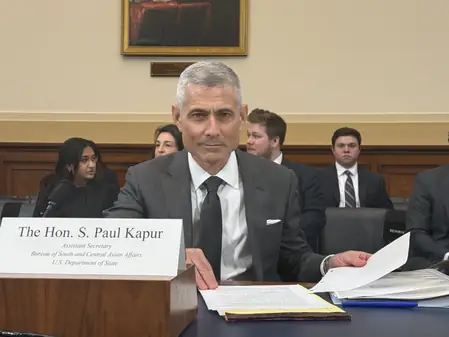
In a key House subcommittee hearing on South and Central Asia, Assistant Secretary Paul Kapoor described Nepal’s recent turmoil as part of a broader wave of democratic renewal. ‘These youth movements are toppling entrenched regimes and paving the way for genuine participation,’ he told lawmakers, drawing parallels to similar shifts elsewhere in the region.
The catalyst was September’s massive anti-corruption protests by Nepal’s Gen-Z generation, which forced the prime minister’s resignation and set the stage for snap elections. Kapoor expressed optimism for a smooth process, assuring that Washington stands ready to collaborate with whichever government emerges victorious.
Subcommittee Chair Bill Huizenga hailed the changes in Nepal and neighboring Bangladesh as strategic turning points. ‘These developments herald a new chapter for US engagement in South Asia,’ he stated, emphasizing the need to forge ties with these nascent administrations.
Democrats echoed the sentiment, with ranking member Sydney Kamlager-Dove calling it a rare chance to strategically support demands for accountable governance. Nepal’s precarious position between India and China underscores its geopolitical sensitivity, where preventing any single power’s dominance is paramount for US interests.
Kapoor reiterated Washington’s goal: countering adversarial influence that could ripple through global markets. This hearing signals clearly that America views Nepal’s transformation not just as internal reform, but as a pivotal front in reshaping South Asian dynamics.