
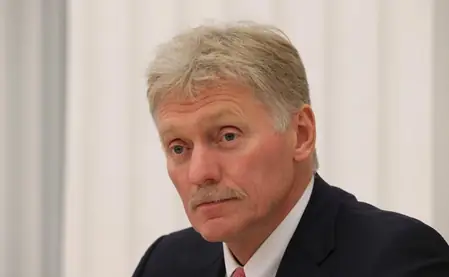
Moscow has firmly dismissed U.S. President Donald Trump’s assertion that India has agreed to stop buying oil from Russia as part of a new trade deal. Kremlin spokesperson Dmitry Peskov labeled the claim as nothing new, emphasizing India’s sovereign right to source energy from multiple suppliers.
In a pointed response during a media briefing, Peskov clarified that Russia has never been India’s sole crude oil provider. ‘India has always purchased petroleum products from various countries,’ he stated. ‘We, like all international energy experts, see no novelty in this situation.’
The controversy erupted after Trump announced that in exchange for reduced U.S. tariffs on Indian goods—dropping to 18%—India pledged to halt Russian oil imports. However, no official communication from New Delhi has confirmed such a commitment, and Russia reports receiving zero indications of any impending cutoff.
Peskov underscored the strategic energy partnership between Russia and India, which continues unabated. He reiterated that any shifts in India’s oil procurement would stem from its own energy security needs and commercial considerations, not external pressures.
Russia’s Foreign Ministry echoed this stance, with spokesperson Maria Zakharova highlighting the mutual benefits of hydrocarbon trade. She noted that Indian refiners rely on specific Russian crude grades and blends that cannot be instantly replaced by alternatives like U.S. oil. ‘This cooperation stabilizes the global energy market,’ Zakharova affirmed.
Background context reveals India’s pivotal role since Western sanctions hit Russia post its 2022 Ukraine invasion. India emerged as the largest importer of Russian crude, accounting for nearly one-third of its total imports by 2025. Recent months have seen a dip in volumes amid evolving global markets and trade dynamics, but ties remain robust.
As geopolitical tensions simmer, the Kremlin’s rebuttal signals unwavering support for India’s energy autonomy. This episode highlights the complexities of international trade, where energy flows defy simplistic political narratives and prioritize practical economics.