
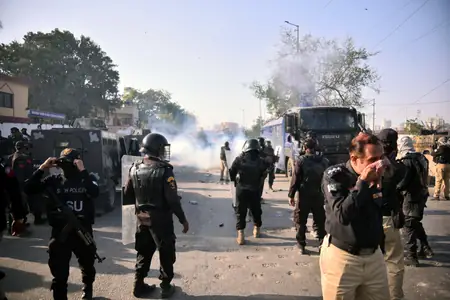
ISLAMABAD – Karachi, Pakistan’s bustling port city, remained paralyzed for the third consecutive day on Wednesday amid heightened security measures following the assassination of Iran’s Supreme Leader Ayatollah Ali Khamenei. The unrest erupted after deadly protests outside the US Consulate, claiming at least 11 lives and injuring many more.
The demonstrations began in response to Khamenei’s killing, with angry crowds gathering near the American diplomatic mission on Mai Kolachi Road. Pakistani authorities swiftly imposed strict lockdowns, deploying traffic police, rangers, and barricades across key routes to prevent further escalation.
Heavy shipping containers block PIDC Bridge, cutting off access from Jinnah Bridge to Mai Kolachi. Rangers patrol MT Khan Road and surrounding areas, allowing passage only to verified residents flashing identification. Alternative routes via Clifton Bridge have been suggested for those in Bilawal House and Boat Basin heading to Metropole or II Chundrigar Road.
Traffic police are stationed throughout the city, manning numerous checkpoints. Officials urge residents to call the traffic helpline for real-time updates on road conditions and safe passages.
In a broader fallout, the US Embassy in Islamabad and consulates in Lahore and Karachi have suspended operations until March 6. A Tuesday post on X from the embassy stated, ‘Due to the current security situation, all visa appointments at the US Embassy Islamabad and Consulates General Lahore and Karachi are canceled through March 6.’
The incident underscores rising tensions in the region, with Pakistan balancing domestic security and international diplomatic pressures. As protests subside, questions linger over the long-term impact on US-Pakistan relations and urban stability in Karachi. Authorities vow to restore normalcy soon while maintaining vigilance.