
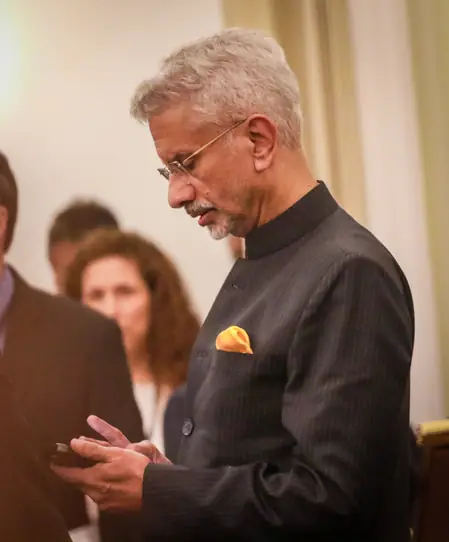
New Delhi erupted into diplomatic action on Saturday as External Affairs Minister S. Jaishankar held urgent phone conversations with his counterparts from Iran and Israel. Expressing profound concern over the spiraling tensions in West Asia, Jaishankar appealed for immediate de-escalation to prevent a full-blown regional crisis.
The calls came against a backdrop of unprecedented escalation. Following joint US-Israel strikes dubbed ‘Operation Epic Fury’—described by Israel as pre-emptive—targeting Iranian military and leadership sites, Iran retaliated with a barrage of missiles aimed at Israeli positions and US bases across the Gulf region. The exchanges have pushed the volatile Middle East to the brink of war.
In his discussion with Iranian Foreign Minister Seyed Abbas Araghchi, Jaishankar shared India’s deep worries about recent developments and stressed the urgent need to halt further instability. Earlier, he spoke with Israeli Foreign Minister Gideon Sa’ar, emphasizing that dialogue and diplomacy remain the only viable path forward.
The Ministry of External Affairs issued a statement underscoring India’s close monitoring of the rapidly evolving situation. ‘India urges all parties to prioritize dialogue over military confrontation, respect sovereignty and territorial integrity, and exercise maximum restraint,’ it said.
US President Donald Trump confirmed the operation and hinted at regime change in Iran, while Tehran vowed a stern response. International bodies have warned of a looming humanitarian catastrophe as fears of broader conflict intensify.
India’s balanced diplomacy shines through its strong ties with Israel and historic relations with Iran. New Delhi’s push for restraint and talks prioritizes regional stability and safeguards its strategic interests in the energy-rich region. As the world watches anxiously, Jaishankar’s interventions highlight India’s role as a voice of reason in global hotspots.