
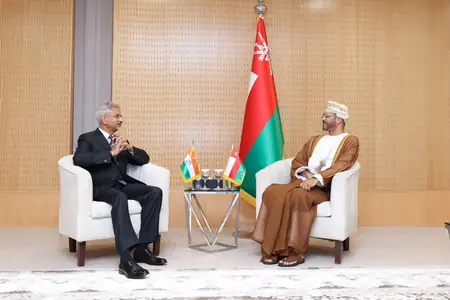
New Delhi witnessed a crucial diplomatic exchange on Thursday as India’s External Affairs Minister S. Jaishankar held a telephonic conversation with Oman’s Foreign Minister Sayyid Badr bin Hamad bin Hamoud Albusaidi. The focus of their discussion was the escalating tensions in West Asia, a region critical to global stability and India’s energy security.
Jaishankar took to the social media platform X shortly after the call, underscoring the importance of the dialogue. ‘Had a conversation with FM @BadrAlbusaidi of Oman on the current situation in West Asia,’ he posted, signaling India’s proactive engagement in regional peacemaking efforts.
This conversation follows closely on the heels of Prime Minister Narendra Modi’s phone call with Oman’s Sultan Haitham bin Tariq on March 3. During that interaction, PM Modi condemned violations of Oman’s sovereignty and territorial integrity while praising the Gulf nation’s support for its Indian expatriate community.
The leaders exchanged views on recent developments in West Asia, agreeing that sustained diplomatic initiatives are essential to restore peace and stability. The Indian Embassy in Muscat had earlier reported the tragic loss of an Indian national in an attack on an oil tanker on March 2. The vessel, flagged by Marshall Islands, was struck by an unmanned surface vessel approximately 52 nautical miles off Oman’s coast.
Carrying 59,463 metric tons of cargo, the tanker suffered a fire and explosion in its engine room, claiming the life of one Indian crew member. Rescue operations successfully evacuated 21 crew members, including 16 Indians, 4 Bangladeshis, and 1 Ukrainian. Oman’s Royal Navy continues to monitor the site and warn passing vessels.
The current strife traces back to joint US-Israel strikes on Iran on February 28, aimed at degrading Tehran’s missile capabilities and military infrastructure. These attacks resulted in the deaths of several top Iranian officials, including a key figure close to Supreme Leader Ayatollah Ali Khamenei. Iran retaliated with drone and missile strikes on US bases, regional capitals, and allied forces, intensifying the conflict across West Asia.
India’s diplomatic outreach reflects its strategic interests in the region, home to millions of Indian workers and a vital source of energy imports. As tensions simmer, New Delhi’s balanced approach—maintaining ties with all parties—positions it as a potential mediator in de-escalation efforts. The coming days will reveal whether these high-level talks pave the way for broader regional dialogue.