
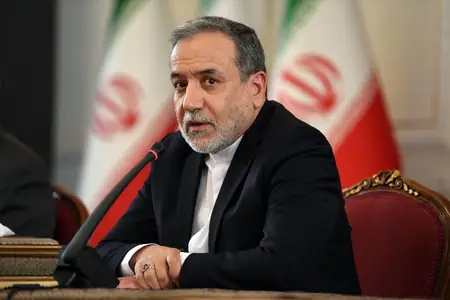
Washington, March 1 – In a fiery rebuke, Iran’s Foreign Minister Abbas Araghchi condemned recent US airstrikes that claimed the life of Supreme Leader Ali Khamenei, labeling them unlawful and promising a decisive response without preconditions. Speaking to ABC News, Araghchi dismissed Washington’s justifications outright, framing the attacks as blatant aggression while positioning Iran’s forthcoming actions as legitimate self-defense.
‘The United States is committing an act of aggression. What we are doing is an act of self-defense,’ Araghchi declared, underscoring Tehran’s legal and diplomatic stance under international law. His words left no room for de-escalation, emphasizing Iran’s resolve to protect itself by any means necessary.
This comes amid ongoing US operations targeting Iran’s missile infrastructure, which American officials describe as systematic efforts to neutralize threats. Yet Araghchi made no concessions on military losses or internal instability following Khamenei’s death, projecting unyielding strength.
On Capitol Hill, reactions are mixed. Senate Intelligence Committee Chair Tom Cotton vowed continued strikes on Iranian missiles, launchers, and production sites, warning of persistent threats to US bases, Arab allies, and Israel. ‘There’s no doubt Iran will keep targeting our bases in the region, our Arab allies, and Israel,’ he cautioned.
Democrats pushed back. Senator Mark Warner questioned the intelligence, noting no imminent threat justified the strikes and uncertainty loomed over Iran’s post-Khamenei landscape. Senator Adam Schiff criticized the operation’s scale, arguing it lacked basis for regime change ambitions.
Iran now navigates a constitutional transition, with the Assembly of Experts tasked to select a new leader. The Islamic Revolutionary Guard Corps (IRGC) wields significant influence, potentially shaping the power vacuum. As tensions simmer, Araghchi’s unyielding rhetoric signals a volatile path ahead, with global eyes on Tehran’s next move.