
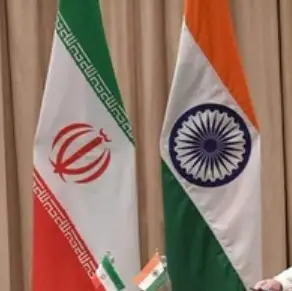
Washington, March 8 – In a bold move to reshape Iran’s future, opposition leaders have unveiled a comprehensive transition plan that places India at the center of its economic revival. The blueprint, part of the Iran Prosperity Project’s emergency phase, calls for restarting the Chabahar Port project with New Delhi and resuming long-term crude oil exports to one of the world’s fastest-growing energy markets.
This 178-page document outlines how a transitional government could stabilize the economy and foreign policy in the first six months after the current regime’s fall. It positions India as an essential economic and strategic partner, aiming to rebuild trade links shattered by years of sanctions and isolation.
Central to the plan is the revival of Chabahar Port on Iran’s southeastern coast. Developed in collaboration with India, the port is envisioned as a commercial hub linking the Persian Gulf and Indian Ocean to Central Asia. For India, it has long been a strategic gateway to Afghanistan and Central Asia, bypassing Pakistan entirely.
The blueprint also pushes for restarting crude oil exports to India, which was once among Iran’s top energy buyers before U.S. sanctions crippled trade. Geopolitically, Iran sees itself as a bridge connecting the Middle East to South and Central Asia, with India as a key Asian ally.
Beyond India, the plan seeks to mend ties with global powers like China and Russia while balancing economic partnerships with national sovereignty. It proposes reviewing existing strategic agreements for transparency and mutual benefit. Neighboring countries, including Pakistan, would see enhanced cooperation on security, counter-terrorism, and curbing cross-border militancy.
Leading the effort is Crown Prince Reza Pahlavi, son of Iran’s last Shah, who has lived in exile in the U.S. since 1978. He rallied technocrats, academics, and the Iranian diaspora to craft this roadmap for institutional reform, economic stabilization, and democratic elections.
Iran’s geography positions it perfectly as a commercial crossroads between the Persian Gulf, Indian Ocean, and Central Asia. With sanctions lifted and ties normalized, it could become a major transit hub. India has already invested over 120 million rupees in Chabahar’s Shahid Beheshti Terminal, part of its push for trade routes to Afghanistan and Eurasia.
Despite setbacks from sanctions, funding issues, and regional tensions, this plan signals Iran’s potential re-entry into global commerce. Reviving Chabahar and energy trade with India could unlock massive economic growth after decades of isolation.