
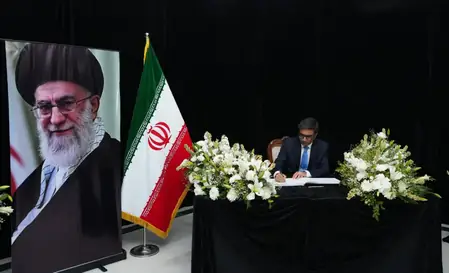
New Delhi erupted in diplomatic activity as India’s Foreign Secretary Vikram Misri visited the Iranian Embassy to express profound condolences over the demise of Iran’s Supreme Leader Ayatollah Ali Khamenei. The 86-year-old leader perished in a devastating joint military strike by Israel and the United States on February 28, sending shockwaves across the Middle East and beyond.
Misri met with Iranian Ambassador Mohammad Fathali, signing the condolence book and conveying India’s deepest sympathies. This gesture underscores India’s balanced approach amid escalating tensions in the region. The embassy has opened its condolence book for three days—March 5, 6, and 9—inviting Indian citizens, diplomats, and sympathizers to pay their respects.
Khamenei, who had led Iran since 1989, was killed alongside top military brass, including the defense minister and IRGC chief, during a high-level meeting. Reports also confirmed the deaths of several family members, including his daughter-in-law, granddaughter, and wife, who succumbed to injuries.
The assassination has plunged the Middle East into chaos. Tehran retaliated with strikes on US bases and attacks on Gulf nations. On Thursday, Azerbaijan reported two drone attacks near its border with Iran, targeting an airport and a school, injuring two people. Baku summoned the Iranian envoy in response.
Iranian state media confirmed the loss, declaring 40 days of national mourning. Global reactions vary, with crowds gathering at the Iranian embassy in Cairo to mourn. As the world watches, India’s diplomatic outreach highlights its commitment to stability in a volatile region.