
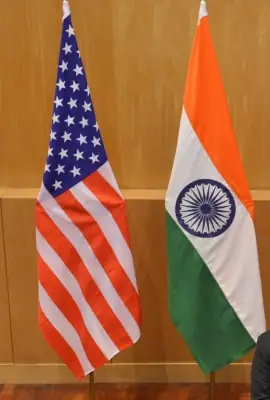
New Delhi is charting a bold new course in global trade, diversifying partnerships amid shifting dynamics with the United States under the Trump administration. A recent analysis in Foreign Affairs highlights how India’s initial optimism for a strategic alliance against China has given way to pragmatic outreach elsewhere.
The turning point came in January with a landmark trade pact with the European Union, signaling a major pivot in India’s geo-economic playbook. EU Commission President Ursula von der Leyen hailed it as the ‘mother of all agreements,’ projecting nearly 30 billion euros in export gains for both sides. This deal was accompanied by a fresh defense accord and several others, underscoring deepening ties.
India’s recent agreements with Australia, the UAE, and others are fortifying its economy, reducing over-reliance on any single power. Experts urge India to join the Comprehensive and Progressive Agreement for Trans-Pacific Partnership (CPTPP), Asia’s premier trade bloc born from the ashes of the original TPP after Trump’s 2018 withdrawal.
CPTPP eliminates tariffs on goods and services while enforcing rigorous standards in labor, intellectual property, and investment. Its 12 members—spanning Australia, Canada, Japan, and the UK—represent 15% of global GDP. With nations like Cambodia and South Korea eyeing membership, the bloc’s influence is expanding.
For India, CPTPP entry promises seamless integration into regional supply chains, a massive export boost, and access to vast markets. Despite hurdles like regulatory alignment, the rewards could position India as a future global superpower, enhancing its strategic autonomy in a multipolar world.