
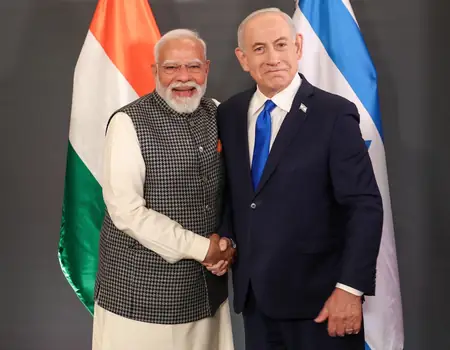
In a potential game-changer for India’s defense landscape, Prime Minister Narendra Modi and his Israeli counterpart Benjamin Netanyahu are set to seal a landmark agreement on the Iron Dome air defense system during their high-level meeting in Tel Aviv. This development, coming hot on the heels of India’s successful ‘Operation Sindoor,’ underscores New Delhi’s aggressive push towards bolstering its aerial defenses against short-range threats.
Operation Sindoor showcased India’s indigenous weaponry prowess, where homegrown systems alongside advanced foreign tech neutralized enemy attacks and obliterated nine terrorist bases in Pakistan and PoK. Weapons like BrahMos missiles, Hammer guided bombs, Rafale jets, Sukhoi Su-30MKI, and Mirage 2000 played pivotal roles in this precision strike, sending a clear message to adversaries.
The leaders’ itinerary includes a visit to the Yad Vashem Holocaust memorial before their bilateral talks at the King David Hotel. Discussions will review the India-Israel strategic partnership, emphasizing defense collaboration, science and technology, trade, and people-to-people ties. They’ll also address key regional and global issues.
Several Memorandums of Understanding (MoUs) in economic, security, and diplomatic domains are expected to be signed, followed by a joint media statement. At the heart of these talks is India’s pursuit of Iron Dome technology, far beyond a simple purchase. This ties into the indigenous ‘Mission Sudarshan Chakra,’ also known as Project Kusha, integrating local production under the ‘Make in India’ initiative.
Israel’s official offer for technology transfer will enable India to manufacture a multi-layered air defense system countering rockets, mortars, and drones. India is also eyeing the cutting-edge Iron Beam laser-based system, a cost-effective, light-speed solution complementing long-range platforms like the S-400. The ultimate goal: an impenetrable national security shield by 2030, safeguarding cities and critical infrastructure.
This deal not only strengthens bilateral ties but positions India as a formidable force in regional security dynamics, likely rattling neighbors like Pakistan who have long relied on asymmetric warfare tactics.