
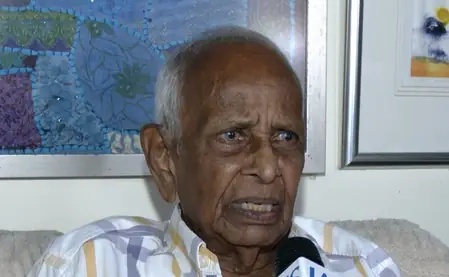
KUALA LUMPUR – In a heartfelt encounter during his Malaysia visit, Prime Minister Narendra Modi met with Jayaraj Raja Rao, a veteran of the Indian National Army (INA). The aging freedom fighter, who once garlanded by Netaji Subhas Chandra Bose himself, expressed profound admiration for Modi’s leadership.
Rao, now in his twilight years, described the meeting as a moment of sheer fortune. ‘I consider myself lucky to meet another great Prime Minister of India,’ he told IANS in an exclusive interview. He lauded Modi’s transformative work in rural India – from building toilets and ensuring clean water supply to sustaining economic growth without favoring any community.
‘PM Modi treats everyone equally – Hindus, Muslims, Christians – and stands firm against Pakistan,’ Rao emphasized. He appreciated India’s balanced foreign policy, steering clear of exploitative powers like the US, which he views as aggressive and imperialistic.
The conversation naturally turned to Netaji, whom Rao met as a young boy of 12 or 13. ‘Netaji garlanded me personally,’ he recalled fondly. Modi, a known admirer of Bose, was thrilled to connect with someone from that era. Rao proudly declared himself a ‘Malaysian Indian,’ not ‘Indian Malaysian,’ prioritizing his Indian identity.
Delving into Netaji’s enduring impact, Rao highlighted three key traits: his eloquence that united diverse Indians beyond regional lines like Tamil, Malayali, or Telugu; his advocacy for aggressive military action against British rule, contrasting Gandhi’s non-violence; and his commitment to gender equality, exemplified by forming the Rani of Jhansi Regiment with women volunteers from Southeast Asia.
Rao expressed regret over the INA’s underrecognized role in India’s independence. Formed by Netaji in 1943 from Indian POWs and civilians in Singapore and Malaya, the army marched towards India’s borders through Burma, only for history to somewhat overshadow their sacrifices.
Modi’s visit underscored the INA’s legacy among overseas Indians, reinforcing bonds of history and pride. As Rao put it, uniting ethnic Indians in a democracy is a ‘remarkable achievement.’ This poignant reunion bridges past valor with present progress.