
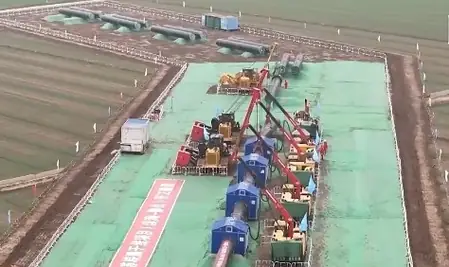
Beijing witnessed a landmark moment in its energy infrastructure development as construction kicked off on three pivotal natural gas pipeline projects on February 28. Leading the charge is the Jiangsu-Anhui-Henan trunk line, marking China’s first national major oil and gas pipeline initiative under the 15th Five-Year Plan. This project symbolizes the dawn of a new phase in building the nation’s integrated natural gas network.
Joining this flagship effort are the Wen 23-Anqing natural gas pipeline and the Shandong Pipeline North Trunk Line. Official groundbreaking ceremonies took place in Anhui and Shandong provinces, respectively. With a combined investment exceeding 30 billion yuan, these ventures promise to revolutionize gas distribution across central and eastern China.
Upon completion, the projects will significantly boost pipeline density and interconnectivity in key regions. Experts anticipate enhanced energy security, reduced reliance on imports, and more stable supplies for industries and households alike. This move aligns with China’s aggressive push towards cleaner energy sources amid global sustainability goals.
The initiatives come at a critical juncture, as the country grapples with rising domestic gas demand. By weaving a denser web of pipelines, Beijing aims to knit together disparate regional networks into a seamless national grid. Stakeholders hail it as a game-changer for economic growth and environmental compliance.
As shovels hit the ground, optimism abounds. These pipelines not only address immediate supply challenges but also lay the groundwork for future expansions. China’s energy landscape is set for transformation, underscoring its commitment to self-reliance in vital resources.