
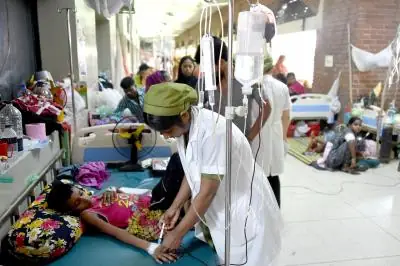
Dhaka, the bustling capital of Bangladesh, is choking under a toxic haze of industrial pollution, pushing its healthcare system to the brink. A recent investigative report highlights how this man-made environmental disaster is fueling a surge in respiratory diseases, overwhelming hospitals and threatening public health on an unprecedented scale.
Despite contributing just 0.3% to global CO2 emissions, Dhaka ranks among the world’s most polluted cities. Air quality indices here routinely hit hazardous levels, triggering spikes in asthma, lung cancer, bronchitis, pneumonia, and chronic obstructive pulmonary disease (COPD). The flat, low-lying geography of Bangladesh exacerbates the problem, trapping pollutants and amplifying climate change impacts.
Dr. Mustafizur Rahman, a leading pulmonologist at the National Institute of Diseases of the Chest and Hospital, warns that unchecked pollution could ‘completely destroy’ the nation’s health infrastructure. Slum dwellers, crammed near factories and brick kilns, face the worst: inadequate sewage systems breed infections, while factory smoke poisons the air and toxic effluents contaminate rivers.
Brick kilns dotting Dhaka’s outskirts belch black smoke, while garment and leather factories dump hazardous chemicals into waterways. The economic toll is devastating—skyrocketing medical bills drive families into debt, forcing many into perilous illegal migrations across the Mediterranean to Europe.
Respiratory specialist Dr. MD. Safiun Islam notes a dramatic rise in patients over the past five years. ICU lines stretch 20-30 deep, compounded by political instability. ‘Controlling polluting sectors is an emergency,’ he insists.
Experts call for urgent separation of industrial zones from residential areas, public awareness campaigns on sanitation, and strategic planning post the upcoming February 12 elections—the first since Sheikh Hasina’s ouster in August 2024. With a population of 174 million projected to make Dhaka one of the world’s largest cities by 2050, time is running out to avert a full-blown health catastrophe.