
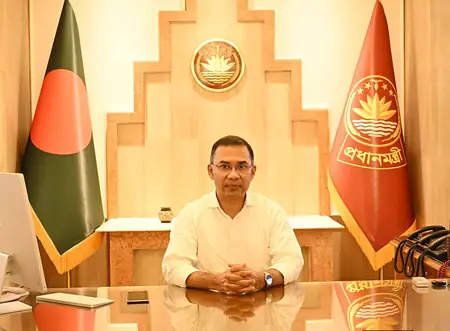
Dhaka’s political landscape has shifted dramatically following the BNP’s sweeping victory in the 13th parliamentary elections. Led by Tarique Rahman, the Bangladesh Nationalist Party has formed a new cabinet where a staggering 70% of ministers hail from business backgrounds. This revelation comes straight from affidavits submitted to the Election Commission, as reported by local media outlets.
Out of 50 ministers and state ministers, 35 have declared business as their primary profession. The Daily Dhaka Tribune’s in-depth analysis of these documents shows that 19 cabinet ministers and 16 state ministers identified themselves as entrepreneurs. Lawyers form the next largest group, though some ministers listed multiple professions. Notably, only two leaders—Prime Minister and BNP Chairperson Tarique Rahman, and Education Minister ANM Ehsanul Haq Milan—professed politics as their main occupation, despite their extensive political experience.
The swearing-in ceremony on February 17 at the National Parliament’s South Plaza in Dhaka saw 25 ministers, including two technocrats, take oaths. This business-heavy cabinet has sparked debates on potential conflicts of interest.
Transparency International Bangladesh (TIB) Executive Director Iftekharuzzaman voiced serious concerns. ‘If ministers fail to rise above conflicts of interest in cabinet decisions and ministry activities, their positions could become tools for business gains,’ he warned, urging them to recuse from decisions benefiting their ventures directly or indirectly.
Ignoring such standards, he cautioned, could undermine competitive markets and burden ordinary citizens with negative consequences. This trend extends beyond the cabinet. Among the 300 elected MPs, 174—or 59%—declared business professions, including at least 15 linked to the garment industry.
BNP secured 209 seats, with 145 of its victorious candidates being businesspersons. Jamaat-e-Islami, with 68 seats, has 20 MPs from business backgrounds. TIB researcher Mohammad Touhidul Islam presented a study at a press conference last week, titled ’13th National Parliament Election Process and Affidavit-Based Observation,’ detailing MPs’ assets, liabilities, and professional statuses.
According to Bonik Barta, 236 new MPs are millionaires (79.46% of total), including 13 billionaires. BNP boasts 189 millionaire MPs (90.87% of its elected), while Jamaat has 38 (55.07%). This wealth and business dominance raises questions about governance priorities in the new parliament.