
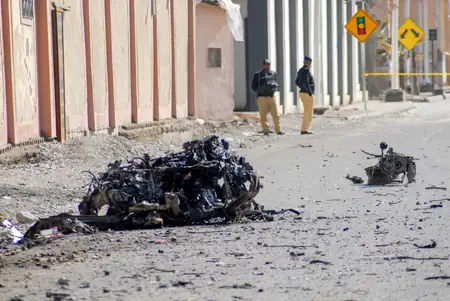
The recent surge in violence between Baloch militants and Pakistani forces in Balochistan has thrust the region into the global spotlight. Far from a sudden eruption, this crisis has been brewing for years, fueled by alleged atrocities and repressive policies of the Pakistan Army, according to a detailed analysis.
Published on the Eurasia Review portal, the report argues that Balochistan’s turmoil exposes deep structural flaws in the Pakistani state. When politics becomes militarized and the army oversteps into decision-making, the consequences are dire and far-reaching.
Islamabad blames ‘foreign hands’ for the insurgency, but locals point to decades of political neglect, human rights abuses, and resource exploitation by the central government. These grievances have turned the province into a powder keg.
Despite its vast arid landscape contributing little to Pakistan’s economy, Balochistan is marketed globally as a land of opportunity. It’s the epicenter of Chinese investments via the China-Pakistan Economic Corridor (CPEC) and now attracts U.S. capital in mining. Rich in copper, gold, coal, and gas, the province is touted as key to Pakistan’s economic revival.
Yet, heavy militarization has failed to deliver stability. Persistent attacks signal that force alone cannot secure lasting peace. Geopolitically vital, Balochistan provides Pakistan access to the Arabian Sea, borders Iran and Afghanistan, and links China to the Indian Ocean.
Protests and violent incidents have spiked recently. Under Army Chief Asim Munir, recently promoted to Field Marshal, civil-military tensions have worsened, leading to a strategic stalemate.
Since 2019, intensified security operations have seen the army underreport its casualties. Issues like enforced disappearances, fake encounters, and mass arrests of Baloch activists persist without resolution.
Islamabad frames Balochistan solely as a security issue, ignoring the political roots. Local marches and student protests have met with arrests, media blackouts, and intimidation.
The report concludes that Balochistan is becoming a festering sore not just for its people, but for Pakistan’s future stability.