
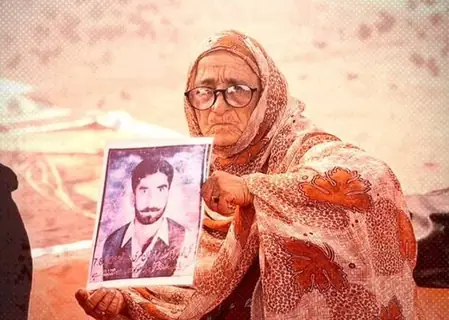
In the arid landscapes of Balochistan, Amma Huri embodied the unyielding spirit of countless mothers enduring unimaginable loss. The 80-year-old matriarch passed away on February 16, her heart still anchored to the hope of reuniting with her son, Gul Mohammad Marri, who vanished in 2012 amid allegations of enforced disappearance by Pakistani authorities.
Amma Huri’s life became a poignant symbol of resistance against state policies that have torn families apart. Forced from her home, she faced relentless harassment yet never wavered. For over a decade, she traversed the streets of Quetta and staged sit-ins in Islamabad, her frail frame belying an iron will. ‘My son—alive or dead, I need to know,’ she pleaded in a viral video, her voice cracking after 14 years of protests.
Reports highlight how thousands like Gul Mohammad have disappeared in Balochistan, fueling a collective grief that has reshaped perceptions between the Baloch people and the Pakistani state. Amma Huri’s protests challenged societal norms, taking her pleas to police stations, courts, and public squares. Even in her twilight years, supporters helped her from vehicles only for her to resume her vigil.
Her death marks not just personal tragedy but a stark reminder of ongoing enforced disappearances. Mothers across Balochistan continue her fight, rejecting official denials. As social media echoes her final words, Amma Huri’s legacy endures, galvanizing a movement for justice and accountability in a province scarred by conflict and neglect.