
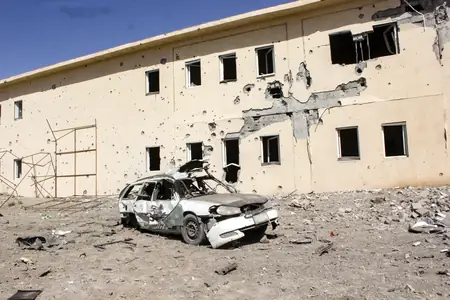
Kabul erupted in defiance as Afghan forces claimed a decisive victory over Pakistani aggression at the strategic Bagram Airbase. Early morning reports from Central Parwan police headquarters revealed that multiple Pakistani fighter jets breached Afghan airspace around 5 AM, attempting a brazen aerial assault on the vital military installation.
Afghan air defenses sprang into action with remarkable precision. Utilizing advanced ZIQ-1 and Two Mile defense systems, the brave defenders neutralized the threat in real-time, delivering a resounding counter-response that sent the intruders scrambling. No casualties or damage were reported on Afghan soil, underscoring the effectiveness of the rapid intervention.
The provincial police emphasized that safeguarding Afghanistan’s airspace and national sovereignty remains an ironclad duty. Any infringement on its territory, people, or values will provoke a firm, lawful retaliation, they warned.
Escalation followed swiftly. Afghanistan’s Defense Ministry announced that retaliatory strikes captured four Pakistani military outposts, resulting in 32 enemy soldiers killed. Taliban sources via Khama Press added that two Pakistani drones were shot down during intense clashes in Paktia, Kandahar, Khost, and Nangarhar provinces.
This flare-up traces back to February 27, when Afghanistan struck Pakistani army posts along the Durand Line in response to Islamabad’s airstrikes in Nangarhar and Paktika on February 21. Pakistan retaliated with ‘Operation Gajab Lil-Haq,’ targeting Afghan military sites in Kabul, Kandahar, and Paktia, as reported by Dawn newspaper.
Tensions have simmered for months, with mutual accusations of cross-border attacks and harboring terrorists. As both nations bolster their frontier defenses, the risk of broader conflict looms large, demanding urgent diplomatic intervention from the international community.