
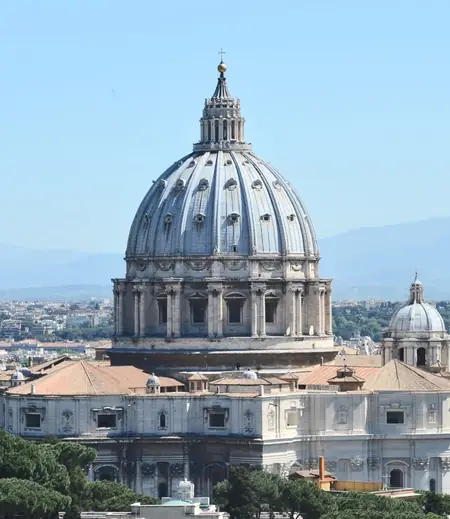
On February 11, 1929, a pivotal moment unfolded in Rome’s Lateran Palace that reshaped the landscape of European politics and Christianity. The Lateran Treaty, signed between Italy and the Roman Catholic Church, granted Vatican City formal recognition as an independent sovereign state. This agreement didn’t just redraw borders; it brought an end to the ‘Roman Question,’ a bitter dispute that had simmered for nearly six decades since Italy’s unification in 1870.
Italian Prime Minister Benito Mussolini, representing his nation, and Cardinal Pietro Gasparri, on behalf of the Holy See, put their signatures to the historic pacts. Pope Pius XI, the spiritual leader at the time, played a crucial role in steering negotiations toward resolution. He viewed the treaty as essential for preserving the Church’s spiritual autonomy, free from the encroachments of secular political power.
The treaty’s core provisions were straightforward yet profound. Italy acknowledged Vatican City’s independence, spanning just 44 hectares within Rome. In return, the Vatican recognized Rome as Italy’s capital and accepted Catholicism as the state religion. Italy also provided substantial financial compensation to the Church for properties seized during unification.
This resolution fostered a new era of cooperation. Historians credit Pope Pius XI’s pragmatic leadership for bridging the divide. By prioritizing spiritual mission over territorial ambitions, he ensured the Church could operate globally without national interference. The treaty’s legacy endures, symbolizing a delicate balance between faith and state that influences Vatican diplomacy to this day.
As we mark 97 years since this landmark accord, it serves as a reminder of how diplomacy can heal longstanding wounds. Vatican City remains the world’s smallest sovereign state, a unique enclave dedicated to universal spiritual leadership.