
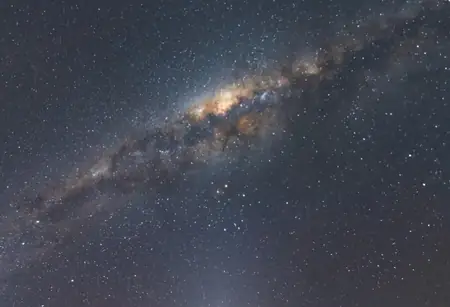
In the vast tapestry of the cosmos, few phenomena captivate stargazers like the zodiacal light, often mistaken for the first blush of dawn. This ethereal glow appears as a faint, pyramid-shaped shimmer in the western sky after sunset or the eastern horizon before sunrise. Far from being the sun’s early rays, it’s sunlight reflecting off microscopic dust particles scattered throughout our solar system.
These tiny specks, originating from comet tails and asteroid collisions, form a hazy band along the ecliptic plane. The light intensifies near the sun’s position, fading into a delicate cone that tricks the eye into anticipating daybreak. Best observed during spring and autumn in the Northern Hemisphere, when the ecliptic tilts sharply against the horizon, it shines brightest for those near the equator, where light pollution is minimal.
NASA scientists, through the Juno mission orbiting Jupiter, have recently traced some of this dust to Mars’ ferocious dust storms. Instruments on the spacecraft detected particle impacts, revealing how Martian ejecta spreads across interplanetary space, contributing to this celestial spectacle. Distinct from auroras, noctilucent clouds, or the Milky Way, zodiacal light offers a window into the solar system’s dynamic dust environment.
To witness this cosmic illusion, venture to dark-sky sites away from city lights and moonlight. As the glow builds silently, it whispers tales of ancient debris drifting through the void, reminding us of the subtle beauties hidden in night’s embrace.