
New Delhi, February 13 – Remember the bulky wooden radio boxes of yesteryears? Twisting the dial would summon news from London or melodious film songs from Ceylon. That magic box wasn’t just entertainment; it was a lifeline. Flashback to 1912: as the Titanic sank, radio waves carried the SOS signal, saving countless lives and etching its name in history.
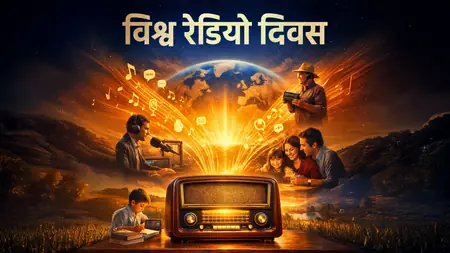
Today, on World Radio Day, we celebrate this enduring medium that has transcended a century of change. Proposed in 2010 by Spanish radio expert Jorge Alvarez and officially recognized by UNESCO on November 3, 2011 – coinciding with the launch of United Nations Radio in 1946 – the day honors radio’s pivotal role in democracy and information dissemination.
In India, radio synonymous with All India Radio (AIR), christened ‘Akashvani’ by Rabindranath Tagore in 1936. From fueling the freedom struggle to powering Digital India, AIR has been a constant companion. Iconic voices like Devki Nandan Pandey, with his signature ‘This is Akashvani, now hear the news from Devki Nandan Pandey,’ and Ameen Sayani’s ‘Baheno aur bhaiyo’ from Binaca Geetmala, turned radio into a household superstar.
Prime Minister Narendra Modi’s ‘Mann Ki Baat’ has revived its glory, proving radio’s unmatched power in inspiration and connectivity. Prasar Bharati’s new digital platform ‘Waves,’ launching in 2026, offers over 65 live TV channels and radio streams via OTT, marking radio’s seamless digital evolution.
Even when internet fails, power outages strike, or disasters loom, radio remains the unbreakable link. Community stations deliver vital flood warnings and weather updates in local dialects, saving lives daily. From analog waves to podcasts and AI scripting, radio adapts while retaining its human soul – emotions no algorithm can replicate.
As we mark World Radio Day, radio stands tall: the ultimate entertainer, informer, and savior in our digital age.