
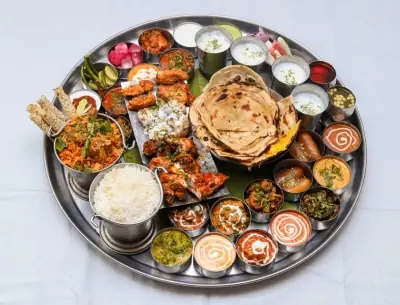
New Delhi: Home-cooked vegetarian thali prices held steady in February, showing no year-on-year change, while non-vegetarian thali costs fell by 3 percent, according to a fresh report from Crisil Intelligence released on Friday.
Despite declines in potato, onion, and pulse prices, the vegetarian thali remained unchanged primarily due to a sharp rise in tomato costs. Onions saw a 24 percent drop compared to last year, thanks to higher arrivals in markets. Potatoes dipped 13 percent year-on-year as harvest peaks and sales from cold storage stocks of the previous rabi season continue.
Pulses also eased 9 percent, supported by ample opening stocks this financial year. The average cost of a home-cooked thali is calculated using raw material prices across North, South, East, and West India, reflecting the impact on common household expenses.
On the non-veg front, broiler prices, which account for 50 percent of the thali cost, declined an estimated 7 percent annually, driving the overall 3 percent reduction.
Crisil Intelligence Director Pushpan Sharma explained, ‘Tomato price surge stems from delayed planting, affecting crop growth and yield. Arrivals in markets from November 2025 to January 2026 dropped 32 percent year-on-year.’
Looking ahead, vegetable prices are expected to soften soon. Tomato rates may stay elevated until mid-April compared to last year, then stabilize with increased seasonal supply and crop cycle shifts.
Sharma added, ‘Potato prices should remain low during March-April peak arrival, while onions face pressure over the next 2-3 months unless exports surge strongly.’
Basmati rice could see softer demand due to Middle East uncertainties and potential trade hurdles, with Iran accounting for 18 percent and other Middle Eastern nations 55-60 percent of India’s basmati exports. Exporters remain cautious over logistics challenges.
‘Non-basmati rice exports, mainly to African countries, are unlikely to face significant impact,’ Sharma noted.