
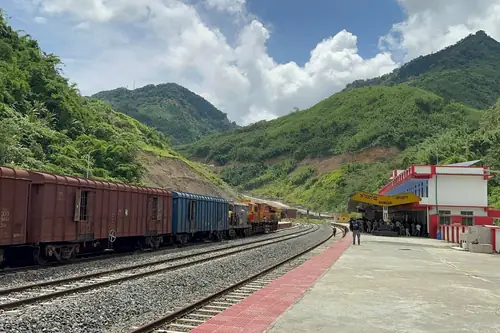
New Delhi’s railway corridors buzzed with activity in February as Indian Railways reported a robust 2.97% year-on-year surge in freight revenue, reaching 14,571.99 crore rupees. This marks a significant milestone in the sector’s recovery and growth trajectory.
Government data released on Friday highlights how last year’s February figure of 14,151.96 crore has been eclipsed, signaling stronger demand across key commodities. Freight loading jumped 3.96% to 137.72 million tonnes from 132.48 million tonnes, underscoring operational efficiency gains.
Transport output, measured in net tonne kilometers (NTKM), climbed 4.18% to 76,007 million NTKM, up from 72,955 million the previous year. This metric reflects not just volume but the distance goods traveled, painting a picture of expanded market reach.
Coal, iron ore, finished steel, fertilizers, cement, and container cargo drove this uptick. Daily iron ore loading soared 27.6% to 0.675 metric tonnes from 0.529. Finished steel and raw iron loadings rose 20.8% to 0.343 metric tonnes.
Raw materials for steel plants (excluding iron ore) saw a whopping 46.9% increase to 0.141 metric tonnes. Fertilizer loading grew 10.2% to 0.184 metric tonnes, while mineral oils and container EXIM traffic surged 17.8%.
Container traffic shone too, with imported freight up 5.6% and domestic up 2.3%. Cumulatively from April 2025 to February 2026, railways loaded 1,503.8 million tonnes, a 3.28% rise from 1,456.07 million tonnes last year.
Freight revenue for this period hit 1.61 lakh crore rupees, with NTKM up 1.62% to 840,000 million. These figures position Indian Railways as a powerhouse in logistics, poised for further expansion amid economic rebound.