
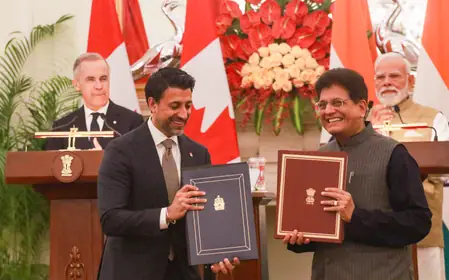
In a landmark move to bolster its nuclear energy ambitions, India has inked a $2.6 billion long-term uranium supply agreement with Canada. This deal, hailed by Prime Minister Narendra Modi as a ‘historic pact,’ is set to accelerate the nation’s push towards 100 gigawatts of nuclear capacity by 2047.
Experts point out that India’s domestic uranium production falls short of future demands, making imports essential. The agreement with Canada, a rising uranium powerhouse with new mining projects underway, ensures a reliable fuel stream for India’s expanding reactor fleet.
Previously reliant on Kazakhstan as its top supplier, India now diversifies its sources. This comes amid recent parliamentary reforms allowing private and foreign firms to build, own, and operate nuclear plants— a shift from strict government monopoly.
These changes address long-standing supplier liability concerns, paving the way for foreign tech partnerships and investments. PM Modi emphasized collaboration on small modular reactors and advanced technologies, while Canadian leader Mark Carney underscored a strategic energy alliance.
The commercial pact between Canada’s Cameco and India’s Nuclear Power Corporation will enhance clean energy production, support sustainability targets, and secure long-term energy needs. Both nations agreed to deepen ties in clean energy, critical minerals, and nuclear tech, fostering affordable and growth-oriented power solutions.
This partnership not only fuels India’s reactors but also strengthens bilateral relations, positioning both countries as key players in the global clean energy transition.