
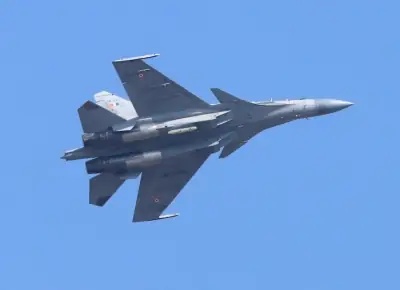
New Delhi is on the cusp of a historic defense acquisition as the Ministry of Defence prepares to greenlight the purchase of 114 Rafale fighter jets from France this week. Sources close to the matter reveal that this massive deal, valued at approximately $39 billion or 3.25 lakh crore rupees, is tailored to bolster the Indian Air Force’s capabilities amid evolving regional threats.
The approval comes just ahead of French President Emmanuel Macron’s visit to India, setting the stage for enhanced bilateral ties. Following the ministry’s nod, the proposal will require final clearance from the Cabinet Committee on Security chaired by Prime Minister Narendra Modi.
Under the deal, India will procure 18 Rafale aircraft directly from Dassault Aviation, with the remaining 96 to be manufactured domestically. This includes twin-seater variants dedicated to pilot training, aligning seamlessly with the ‘Make in India’ initiative and transfer of cutting-edge technology.
The Indian Air Force already operates two squadrons of 36 Rafale jets, with the last ‘C’ variant delivered in December 2024. Meanwhile, the Navy has ordered 26 ‘M’ variant Rafales worth around 63,000 crore rupees, designed for operations from INS Vikrant and INS Vikramaditya aircraft carriers. The package encompasses maintenance, spares, and comprehensive training programs.
Rafale’s combat prowess was demonstrated in last year’s ‘Operation Sindoor’ following the Pahalgam terror attack, where the jets executed precision strikes on Pakistani targets using SCALP missiles capable of hitting over 250 km away. Equipped with Meteor air-to-air missiles, HAMMER precision weapons, SPECTRA electronic warfare suite, and advanced radars, these multirole fighters are game-changers.
Building on last June’s agreements between Dassault and Tata Advanced Systems Limited, a state-of-the-art facility in Hyderabad will produce critical Rafale components like fuselage sections starting 2028. This move not only accelerates deliveries but also cements India’s role in global aerospace manufacturing, promising thousands of jobs and technological self-reliance.