
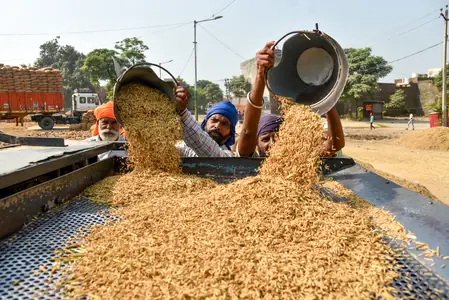
New Delhi has taken a significant step in its public distribution strategy by suspending the fortification of rice under key welfare programs. The decision, announced by the central government, pauses the addition of essential nutrients to rice supplied through the Pradhan Mantri Garib Kalyan Anna Yojana (PMGKAY) and other similar initiatives until a more robust delivery system is in place.
This move follows a detailed review of the fortification process, which highlighted challenges in maintaining nutrient integrity during storage and distribution. Officials from the Consumer Affairs, Food and Public Distribution Ministry revealed that IIT Kharagpur conducted an extensive study on the shelf life of fortified rice kernels (FRK) and fortified rice (FR) under varying agro-climatic conditions across India.
The report underscored how factors like moisture levels, storage conditions, temperature, humidity, and packaging materials critically impact the stability of these products. Over prolonged storage periods—typically two to three years for rice in central pools—there is a notable degradation of micronutrients, reducing the effective shelf life and limiting the nutritional benefits intended for beneficiaries.
Considering the massive scale of operations, with an annual allocation of 37.2 million metric tons under PMGKAY and allied schemes against an estimated availability of 67.4 million metric tons in central godowns, the government prioritized efficacy. The suspension ensures that nutritional supplementation does not compromise the quality or reach of food grains.
Importantly, this pause will not affect the eligibility or quantity of food grains distributed through the Public Distribution System (PDS), Integrated Child Development Services (ICDS), or Mid-Day Meal schemes. States have been granted flexibility to supply either fortified or non-fortified rice for pending receipts from KMS 2024-25 and upcoming KMS 2025-26, based on operational needs.
The government emphasized that this is a temporary measure aimed at developing superior nutrient delivery mechanisms. Experts view it as a pragmatic approach to balance ambition with practicality in India’s vast food security network, ensuring long-term sustainability without disrupting immediate aid to millions.