
In a groundbreaking advancement for cancer treatment, researchers at IIT Bombay have developed a novel technique to safely recover T-cells grown in the lab, potentially revolutionizing CAR T-cell therapies. This innovation addresses a critical bottleneck in immunotherapy, where extracting healthy, viable immune cells without damage has long been a major hurdle.
CAR T-cell therapy involves harvesting a patient’s T-cells, genetically modifying them in a lab to target cancer cells, expanding their numbers, and reinfusing them back into the body. The process promises remarkable results for blood cancers like leukemia and lymphoma, but recovering these engineered cells intact remains challenging. Poor recovery rates lead to insufficient cell quantities for effective treatment or testing.
Professor Prakriti Tayalia from the Department of Biosciences and Bioengineering at IIT Bombay highlighted the issue: ‘On paper, cell recovery seems straightforward, but in practice, it’s one of the biggest challenges. Without enough healthy cells, neither proper testing nor therapy application is feasible.’
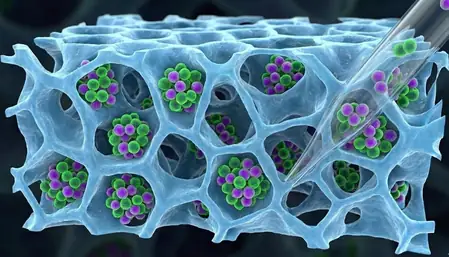
The team’s solution mimics the body’s natural environment using ‘electrospraying’ to create specialized scaffolds from polycaprolactone. These ultra-fine fiber mats resemble dense fishing nets, providing an ideal 3D structure for cell growth. Researchers cultured Jurkat T-cells—a human cell line widely used in T-cell biology, cancer, and HIV studies—within these scaffolds.
Microscopic analysis revealed the cells actively infiltrating the scaffold fibers and firmly adhering to them. Traditional recovery with trypsin enzyme caused high cell death rates. In contrast, using a milder enzyme, Accutase, preserved cell viability remarkably. Recovered cells exhibited healthy behaviors, forming clusters essential for T-cell proliferation and continuing to multiply post-recovery.
This method not only boosts recovery efficiency but also maintains T-cell functionality, paving the way for more reliable CAR T-cell therapies. As immunotherapy gains traction globally, IIT Bombay’s innovation could make treatments more accessible and effective, especially in resource-limited settings. The findings open doors to scalable production of therapeutic cells, marking a significant step forward in the fight against cancer.