
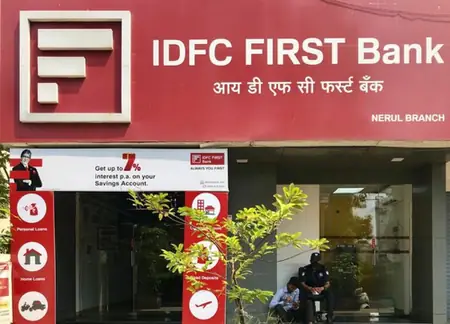
Mumbai’s stock market witnessed a sharp downturn on Monday as IDFC First Bank’s shares plummeted 20%, hitting the lower circuit amid revelations of a massive Rs 590 crore fraud at its Chandigarh branch. The scandal, allegedly orchestrated by bank employees, sent shockwaves through investors and regulators alike.
Trading opened with a 10% drop from the previous close of Rs 83.51, with shares debuting at Rs 75.16. The decline accelerated rapidly, bottoming out at Rs 66.80 as panic selling gripped the market. By 11:38 AM, a partial recovery lifted the stock to Rs 70.39, still down 15.71%.
The bank promptly disclosed the irregularity, pinpointing unauthorized transactions linked to Haryana government accounts at the Chandigarh branch. In a filing to stock exchanges, IDFC First stated that initial probes suggest involvement of certain employees, possibly in collusion with external parties. Four officials have been suspended pending investigation, and authorities including police and regulators have been notified.
Brokerage estimates peg the fraud at 0.9% of the bank’s total assets and a staggering 20% of its projected pre-tax profit for FY26. This incident underscores vulnerabilities in branch-level operations, particularly with high-value government dealings.
In a swift response, the Haryana government issued a circular blacklisting IDFC First Bank and AU Small Finance Bank from all official transactions effective immediately. Departments, boards, corporations, and public sector units must cease deposits, investments, or any financial engagements with these lenders.
Officials are directed to transfer residual balances and close accounts without delay. The finance department highlighted lapses in fixed deposit compliance, noting instances where funds meant for term deposits were parked in low-interest savings accounts, causing financial losses to the state.
Going forward, strict adherence to approved deposit terms is mandated, with monthly reconciliations and reporting of discrepancies. All reconciliations must be completed by March 31, 2026, followed by a certified compliance report by April 4, 2026. This episode raises broader questions about oversight in public sector banking relationships and could reshape trust in mid-sized private banks.