
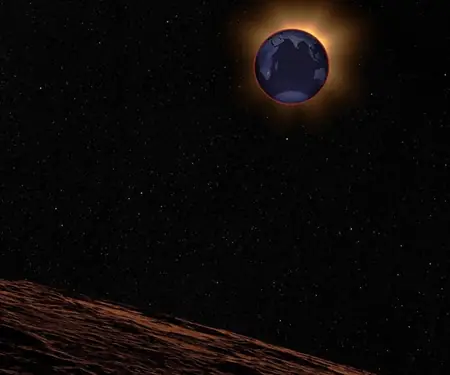
Skywatchers, mark your calendars for March 3, 2026, when a stunning total lunar eclipse, popularly known as the Blood Moon, will light up the night sky. This celestial spectacle occurs as Earth positions itself perfectly between the Sun and Moon, casting its shadow over our natural satellite.
Lunar eclipses happen during full moons, but not every full moon brings one due to the Moon’s tilted orbit around Earth. Typically, we see between four to seven lunar eclipses annually. Unlike solar eclipses, which demand special equipment and are visible only in narrow paths, lunar eclipses grace about half the planet and can be enjoyed with the naked eye under clear skies.
The upcoming March event marks the first lunar eclipse of 2026 and will be a total one, where the Moon fully enters Earth’s umbra, the darkest part of the shadow. Sunlight filtering through Earth’s atmosphere scatters blue and violet wavelengths, allowing red and orange hues to bathe the Moon, creating that eerie crimson glow dubbed the Blood Moon.
Atmospheric conditions play a big role here. More dust or clouds mean a deeper red tint. This eclipse could last several hours, offering ample time for observation.
Later in the year, on August 28, a partial lunar eclipse will follow, where only part of the Moon dips into the umbra.
Lunar eclipses come in three varieties: total, partial, and penumbral. In a total eclipse, the entire Moon is engulfed in shadow, turning blood-red. Partial eclipses see only a portion shadowed, creating a dramatic bite out of the Moon’s edge. Penumbral ones are subtler, as the Moon passes through the faint outer shadow, appearing slightly dimmed or washed out—often going unnoticed without careful watching.
These events remind us of the intricate dance of our solar system. Whether you’re a seasoned astronomer or a casual stargazer, the Blood Moon promises a mesmerizing show. Check local weather and grab a cozy spot outdoors.