
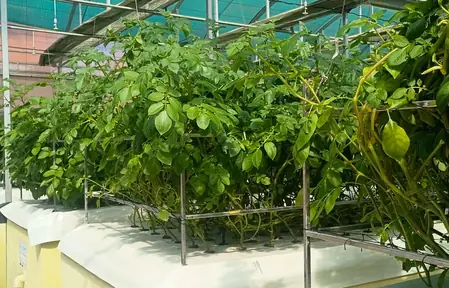
In a groundbreaking shift for agriculture, scientists in Gwalior, Madhya Pradesh, are cultivating potatoes not in soil, but suspended in air. This high-tech aeroponics experiment is unfolding at the Biotechnology Department of Rajmata Vijayaraje Scindia University. The lab is producing around 20 distinct potato varieties, all touted as completely healthy, pure, and disease-free seed potatoes.
Dr. Sushma Tiwari, a key scientist in the department, explains the innovative process. It begins with tissue culture in the lab to grow potato plants. Once these plants undergo hardening to build strength, they are transplanted into the aeroponics unit. Here, roots dangle freely in the air—no soil required. A small cut is made at the root base, and nutrient-rich mist is sprayed using fogging technology.
Every three minutes, a 30-second fogging cycle delivers essential nutrients directly to the roots, mimicking what soil would provide. Temperature inside the unit is precisely controlled to optimize growth. Within days, roots develop robustly, and in 45 to 55 days, potatoes form right in the air. The entire unit can then be elevated, revealing the clean, visible tubers—hence the term ‘air-grown potatoes.’
The standout advantage? These seed potatoes are entirely disease-free, of superior quality, and pure. They outshine traditional seeds in reliability. Currently pricey, they’re confined to lab testing, out of reach for average farmers. The lab nurtures 20 varieties, including a profitable red potato, ones ideal for chips and French fries amid high processing demand, and new light pink varieties popular for consumption with strong market appeal.
Dr. Tiwari emphasizes the research goal: identifying the most beneficial varieties for farmers. Direct adoption by growers could mean high initial costs and complexity. Thus, two more years of field-level trials are planned before seeds hit the market, promising a transformative leap in potato farming efficiency and quality.