
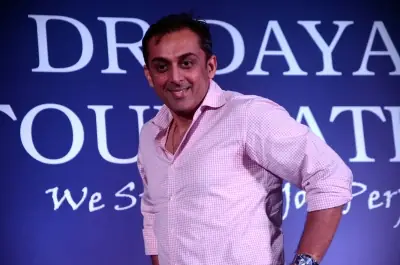
In the land of cricket, where every young aspirant dreams of donning the blue jersey and thrilling home crowds, Rohan Gavaskar’s story stands out as a poignant reminder of unfulfilled ambitions. Born on February 20, 1976, in Kanpur, Uttar Pradesh, as the son of legendary batsman Sunil Gavaskar, Rohan carried the weight of immense expectations from the start. Yet, despite his undeniable talent, he never got to play a single international match on Indian soil—a fact that continues to sting in cricket circles.
Rohan’s journey diverged sharply from his father’s illustrious path. While Sunil was a right-handed opener known for his meticulous, defensive strokeplay, Rohan emerged as a left-handed middle-order aggressor playing for Bengal, not Mumbai. His aggressive style marked a contrast to his father’s measured approach, but success at the highest level remained elusive. Selected for just 11 ODIs between 2004 and 2004, all his matches came on foreign tours to Australia, England, and Netherlands.
Debuting against Australia on January 18, 2004, Rohan scored 151 runs in 10 innings, including a gritty half-century of 54—his best score. No T20Is or Tests followed, capping a brief international stint. Domestically, however, he shone brightly. Captaining Bengal, he amassed 6,938 runs in 117 first-class matches with 18 centuries and 3,157 runs in 126 List A games, featuring one ton and 19 fifties. He even featured in the IPL for Kolkata Knight Riders.
Retiring on February 8, 2012, Rohan transitioned seamlessly into commentary, echoing his father’s post-career role. Today, as fans celebrate his birthday, the narrative around Rohan Gavaskar isn’t just about living in a legend’s shadow—it’s about the home ground that slipped away, a dream deferred in the heart of cricket-mad India. His story underscores the brutal selectivity of international cricket, where talent alone doesn’t guarantee a hero’s welcome at home.