
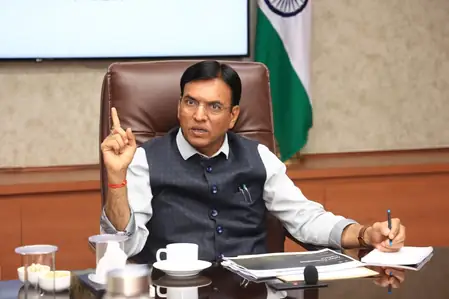
New Delhi buzzed with urgency on Thursday as Union Sports Minister Dr. Mansukh Mandaviya chaired a high-level meeting at the Sports Authority of India headquarters. The agenda was crystal clear: a thorough review of India’s preparations for the 2026 Asian Games, set to unfold from September 19 to October 4 in Japan’s Aichi-Nagoya region.
Senior officials from the Ministry of Youth Affairs and Sports, SAI, and affiliated bodies presented a detailed briefing on the roadmap ahead. The focus was unwavering—ensuring Indian athletes receive world-class support to shine on the continental stage. From cutting-edge training regimens to seamless logistics, every aspect was dissected to eliminate hurdles.
At the heart of these efforts is a 15-member committee, boasting heavyweights like Hari Ranjan Rao, Secretary of the Youth Affairs and Sports Ministry; PT Usha, President of the Indian Olympic Association; Sahdev Yadav, Chef de Mission; and Sharath Kamal, Deputy Chef de Mission. Since December 2025, this powerhouse group has convened four times, streamlining training schedules, player welfare, and logistical blueprints. Their mandate: craft a strategic roadmap to propel India’s campaign to new heights.
Dr. Mandaviya reiterated the government’s ironclad commitment to athlete welfare. ‘Our athletes are our priority,’ he declared. ‘Whether it’s sports science, kits, nutrition, or medical care, we’ll leave no stone unturned. Our goal is to let them focus solely on medal-winning glory without a single distraction.’
He urged all stakeholders to unite in this mission. Strategic planning, robust support systems, and timely execution, he emphasized, will be the keys to surpassing past glories. India’s sights are set on eclipsing the historic 106-medal haul from the 2022 Hangzhou Asian Games, with over 700 athletes expected across more than 40 disciplines.
Preparations are in full swing. Every National Sports Federation has appointed nodal officers to disseminate the AG Technical Handbook, briefing players, coaches, and staff on category-specific details. Teams will be finalized early for focused training. Support staff, including medical teams, are undergoing capacity building, while coordination with Indian embassies abroad ensures smooth logistics.
The Aichi-Nagoya Games introduce a unique five-cluster model, scattering venues across prefectures like Aichi, Gifu, Shizuoka, and Airport-Expo Zone. This demands meticulous planning for travel, recovery, and on-site support. Federations have the green light for exposure tours and competition schedules well in advance.
To acclimatize athletes to container-style accommodations, SAI is setting up mock units at Patiala and Bengaluru centers. A January IOA reconnaissance visit has informed cluster-specific strategies, assigning logistics officers, medical teams, and support staff to each.
Discussions highlighted athlete-centric measures: appointing head medical doctors, ensuring Indian cuisine via SAI cooks, discipline-wise performance reviews, and early team finalization. The next committee meeting on March 20 will nail down team sizes, travel, and operations.
With synchronized efforts, India is poised for a medal bonanza in 2026.