
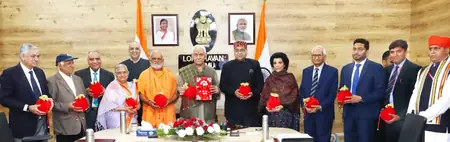
In a landmark meeting held in Jammu on Sunday, the Shri Mata Vaishno Devi Shrine Board (SMVDSB), chaired by Jammu and Kashmir Lieutenant Governor Manoj Sinha, announced a series of transformative decisions aimed at enhancing pilgrim facilities and driving comprehensive development in the surrounding areas. These initiatives are designed to elevate the Vaishno Devi shrine to one of India’s most vibrant and globally recognized spiritual destinations while boosting employment, infrastructure, and community welfare.
The board approved the establishment of an international museum dedicated to the spiritual legacy of Maa Shakti, to be developed in the Natoli area of Katra in collaboration with the Asian Heritage Foundation. Dubbed the ‘Shakti Sangrahalaya,’ it will serve as the region’s first religious, educational, and cultural hub. Complementing this, plans were greenlit for a state-of-the-art sound and light show inspired by global pilgrimage sites and the production of a documentary on the shrine.
Addressing staffing needs, the board decided to fill vacant positions across departments, with recruitment processes set to commence shortly. To empower local youth, a free NEET coaching center will be established for students from nearby areas. In compliance with National Green Tribunal directives, a phased rehabilitation plan for pony owners and service providers along the pilgrimage route was approved.
A dedicated committee was formed to increase pilgrim footfall and improve the overall yatra experience. Emphasizing inclusive growth, the board committed to prioritizing purchases from self-help groups, women entrepreneurs, and local youth, including sourcing pooja materials locally to strengthen the regional economy. Lieutenant Governor Sinha highlighted Katra’s global recognition due to the shrine and pledged to transform it into a clean, vibrant city with modern infrastructure benefiting residents and millions of annual visitors.
Further, the board resolved to lead sports development in the Jammu region, promoting youth health alongside spiritual advancement. Pilgrim safety was bolstered by doubling insurance coverage from Rs 5 lakh to Rs 10 lakh per devotee. The meeting reviewed progress on key projects like route widening, new buildings, and temple constructions, stressing timely execution. All shrine board members and senior officials attended the deliberations.