
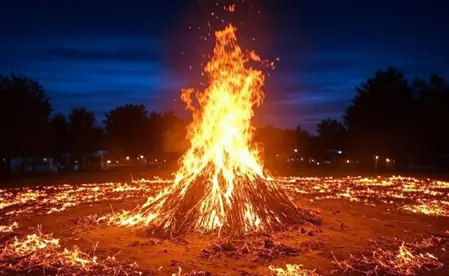
In the vibrant festival season of Holi, when India bursts into colors and bonfires light up the night, one village in Uttar Pradesh stands apart with a tradition that’s endured for millennia. Barsai village in Saharanpur district celebrates Holi with immense joy—splashing colors, sharing sweets like gujiya—but never burns the Holika effigy.
This unusual custom traces back to the Mahabharata era, linked to the village’s iconic west-facing Shiva temple. Unlike typical east-facing Shiva lingams, this self-manifested lingam points westward, a rarity attributed to Bhima, son of Pandavas. Legend has it that during the epic war, Bhima wedged his mace into the temple’s main door, twisting it from east to west.
Local beliefs hold that lighting a Holika fire here could scorch Lord Shiva’s feet, given the lingam’s position. For over 5,000 years, villagers have honored this by burning Holika in neighboring villages before returning for exuberant color-playing on Dhulandi.
The temple’s origins are tied to the Kauravas, who reportedly built it 5,000 years ago. The village’s name, Barsai, stems from Lord Krishna’s visit post-Mahabharata, where he deemed it as sacred as Brajdham.
Today, Barsai pulses with Holi fervor. Families gather, colors fly, and laughter echoes, blending ancient faith with festive spirit. This tradition underscores how local legends shape cultural practices, preserving history amid modern celebrations.