
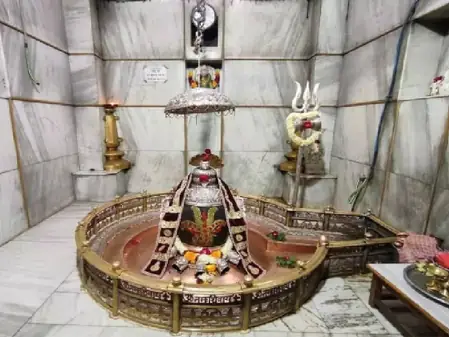
Nestled along the sacred banks of the Shipra River in Ujjain, the Mahakaleshwar Temple stands as one of India’s 12 revered Jyotirlingas, a south-facing, self-manifested shrine dedicated to Lord Shiva. Devotees flock here believing that a single darshan can transform lives, bending the very fabric of time. Yet, hidden within this spiritual powerhouse is an even older secret: the Vriddha Kaleshwar Mahadev temple, whose idol predates the main sanctum and completes any pilgrimage to Mahakal.
Before entering the primary garbhagriha housing Baba Mahakal’s lingam, pilgrims must pay homage at Vriddha Kaleshwar, deemed more ancient than its famous counterpart. This shrine features a Shiva lingam mirroring Mahakal’s in size and form, adorned daily with the same rituals and grandeur. Legends whisper that Vriddha Kaleshwar represents Mahakal’s elderly avatar, emerging on earth even before the primary deity.
The temple complex, rich with antiquity, bears scars from historical invasions that attempted to destroy both lingam and structure. Despite its somewhat dilapidated state—a testament to turbulent pasts—regular maintenance preserves its sanctity. Unlike the restricted touch-darshan at Mahakal, Vriddha Kaleshwar remains accessible around the clock, inviting devotees for intimate blessings.
Throngs of faithful especially converge during Sawan and Maha Shivratri, offering special pujas for wish fulfillment. Daily aartis echo those of the main temple, fostering a profound connection. Skipping this elder form’s darshan leaves the Mahakal journey incomplete, as ancient beliefs hold that true spiritual merit blooms only through both.
Ujjain’s spiritual tapestry weaves these twin shrines into an unbreakable bond, drawing millions seeking divine intervention. As restoration whispers grow, Vriddha Kaleshwar continues to silently fulfill vows, proving time cannot erode unwavering faith in the eternal Shiva.