
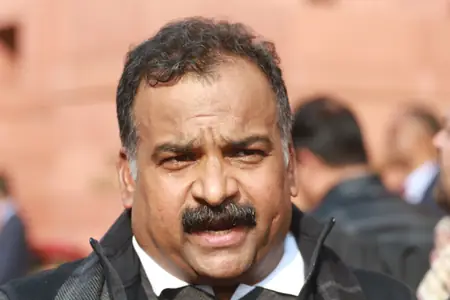
CHENNAI: In a pointed response to Chief Minister M.K. Stalin’s recent remarks dismissing the prospect of a coalition government post-2026 Tamil Nadu Assembly elections, Congress MP B. Manickam Tagore emphasized that the ultimate decision rests with the people of the state.
Stalin, who leads the DMK, had firmly stated that Tamil Nadu’s political tradition favors single-party rule over coalition setups. This came amid growing debates within the DMK-led alliance about the shape of governance after the polls.
Tagore, the Virudhunagar MP, took to social media to assert that whether Tamil Nadu sees a single-party administration or a coalition will be determined by voters. ‘The form of post-election governance must be shaped by democratic mandate, not preemptive political declarations,’ he stressed.
Reflecting on past opportunities, Tagore highlighted the 2006 Assembly elections where DMK secured 96 seats in the 234-member house, falling short of a majority. Despite this, DMK completed its term with external support from allies like Congress (34 seats), PMK (18 seats), and CPI(M) (9 seats).
He lamented that Congress missed a chance then to negotiate formal power-sharing with then-Chief Minister M. Karunanidhi. ‘This was a golden political opportunity lost for Congress in Tamil Nadu,’ Tagore noted.
As preparations for the 2026 elections intensify, Tagore’s comments have reignited discussions within the alliance. Political observers now watch closely to see if alliance partners revisit their stance on coalition governance or stick to single-party preferences.
The debate underscores the delicate balance of alliances in Tamil Nadu’s dynamic political landscape, where voter sentiment could redefine traditional norms.